
“High protein, low carb” can sound like a rule to pile meat onto every plate and remove bread, beans and fruit. That extreme version is neither required nor suitable for everyone. A more practical high protein and low carb diet keeps protein prominent, reduces refined carbohydrates, protects fiber and food variety, and leaves room to adjust portions to your health, culture, activity and budget.
This guide gives you a flexible plate-building method, a seven-day meal plan, vegetarian swaps, shopping guidance and clear safety boundaries—without promising rapid fat loss or prescribing one macro target to every reader.
Quick answer: Build meals around a quality protein, plenty of non-starchy vegetables, an unsaturated fat and an optional portion of minimally processed carbohydrate. “Lower carb” should usually mean fewer sugary drinks, sweets and refined starches—not zero vegetables, fruit, beans or whole grains.
Editorial note: This article is general nutrition education, not a diagnosis, treatment plan or personalized prescription. It has not been medically reviewed. The sample plan is not laboratory analyzed and does not guarantee a specific protein, carbohydrate or calorie intake. Read our editorial and corrections policy.
Table of contents
- What this eating pattern means
- Protein and carbohydrate targets
- The balanced plate method
- Foods to emphasize
- Foods to limit without banning them
- Seven-day beginner meal plan
- Vegetarian and budget swaps
- Weight-loss expectations
- Who should get professional guidance
- Meal prep and food safety
- Frequently asked questions
What is a high protein and low carb diet?
A high protein and low carb diet is a broad eating framework, not one standardized medical diet. Protein makes up a larger share of meals than it did before, while carbohydrate—especially refined grains, sweets and sugar-sweetened drinks—is reduced.
It does not automatically mean:
- A ketogenic diet
- Zero fruit, beans or whole grains
- Unlimited meat, cheese or butter
- A fixed number of carbohydrate grams
- A guaranteed weight-loss method
For this beginner guide, “lower carb” means choosing smaller or less frequent portions of highly refined carbohydrates while keeping nutrient-dense plant foods. The current U.S. Dietary Guidelines for Americans, 2025–2030, emphasize whole, nutrient-dense foods including protein foods, dairy, vegetables, fruit, healthy fats and whole grains.[2]
That whole-food context matters more than attaching a “low-carb” label to a meal built from processed meat, butter and packaged snack bars.
High protein and low carb diet targets
There is no responsible single target for every reader. Needs change with body size, age, health, pregnancy, training, total energy intake and medical treatment.
Start with your baseline protein needs
Harvard’s Nutrition Source summarizes the National Academy of Medicine recommendation that adults consume at least 0.8 grams of protein per kilogram of body weight per day. It also notes an acceptable range of 10% to 35% of total calories from protein and emphasizes that individual needs vary.[3]
Those figures are context—not an instruction to jump directly to the top of the range. Someone who lifts weights, is recovering from illness, is pregnant, is older or has a medical condition may need individualized guidance.
Define “lower carb” by food quality first
Before counting grams, reduce the sources that usually add carbohydrate with little fiber or satiety:
- Sugary drinks
- Candy and pastries
- Large portions of refined bread, white rice or standard pasta
- Sweetened breakfast cereals
- Frequent chips and crackers
Then decide whether you actually need to reduce minimally processed sources such as fruit, beans, lentils, oats, potatoes or whole grains. Many people can follow a high protein and low carb diet without removing these foods.
Avoid “net carb” precision unless you need it
“Net carbs” are often calculated by subtracting some or all fiber and sugar alcohols from total carbohydrate. Label formulas and digestive responses vary, so this guide does not use net-carbohydrate promises. People managing diabetes or using a medically prescribed carbohydrate target should follow their clinician’s method.
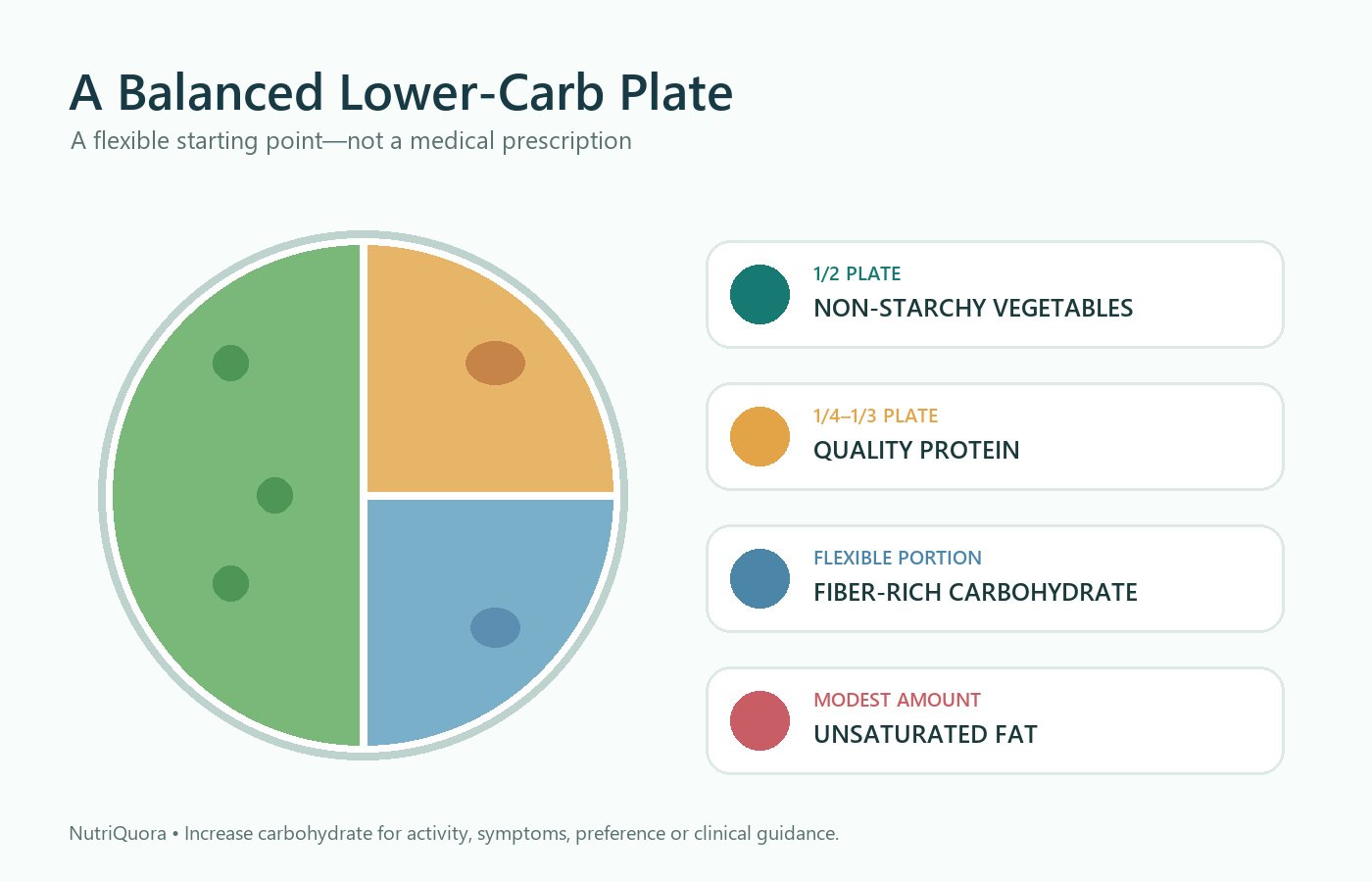
The balanced high protein and low carb plate
Use this flexible framework at lunch and dinner:
| Plate component | Practical portion | Examples |
|---|---|---|
| Non-starchy vegetables | About half the plate | Broccoli, leafy greens, peppers, cauliflower, cucumber, mushrooms |
| Protein | About one-quarter to one-third | Fish, poultry, eggs, tofu, tempeh, Greek yogurt, cottage cheese, lean meat |
| Fiber-rich carbohydrate, optional | Up to one-quarter | Beans, lentils, brown rice, quinoa, oats, fruit, potato |
| Unsaturated fat | A modest amount | Olive oil, avocado, nuts, seeds |
This is a visual starting point, not a medical prescription. Increase or decrease the carbohydrate portion based on activity, preferences, symptoms and professional advice. Athletes and highly active people may feel and perform better with more carbohydrate than a sedentary beginner.
High protein and low carb diet foods to emphasize
Protein foods with a useful “package”
Harvard’s Nutrition Source advises looking beyond protein grams to the whole protein “package”—including saturated fat, sodium, fiber and other nutrients.[3] Rotate among sources rather than relying on one food every day.
Animal-based options
- Fish and seafood
- Chicken or turkey
- Eggs
- Plain Greek yogurt or cottage cheese
- Lean cuts of meat in moderate portions
Plant-based options
- Tofu, tempeh and edamame
- Lentils and beans in portions that fit your carbohydrate goals
- Seitan, if gluten is tolerated
- Nuts and seeds
- Unsweetened soy foods
Beans and lentils contain carbohydrate, but they also provide fiber and plant protein. A high protein and low carb diet does not have to exclude them.
Non-starchy vegetables
Use vegetables to provide volume, fiber, color and variety:
- Leafy greens
- Broccoli and cauliflower
- Cabbage and Brussels sprouts
- Zucchini and eggplant
- Mushrooms
- Peppers and tomatoes
- Green beans
Frozen vegetables are nutritious, convenient and often less expensive than out-of-season fresh produce.
Flexible carbohydrate choices
When you include carbohydrate, choose a portion that supports your needs:
- Berries or whole fruit
- Oats
- Quinoa or brown rice
- Beans and lentils
- Potato or sweet potato
- Whole-grain bread or wraps
Carbohydrate quality and portion are more useful levers than labeling every carb “bad.”
Fats and flavor
Choose olive oil, avocado, nuts, seeds, herbs, spices, vinegar, mustard, yogurt-based sauces and citrus where tolerated. Fats are energy-dense, so “healthy fat” does not mean unlimited portions.
Foods to limit on a high protein and low carb diet
A sustainable high protein and low carb diet usually reduces, rather than morally labels, these foods:
- Sugar-sweetened drinks
- Frequent sweets and desserts
- Refined snack foods
- Large portions of white bread, white rice or standard pasta
- Processed meats such as bacon, sausage and hot dogs
- Protein bars or shakes with long ingredient lists and substantial added sugar
- Very large amounts of butter, cream and high-fat cheese
You do not need perfect adherence. A flexible plan that fits your culture and budget is more useful than a strict plan you cannot sustain.
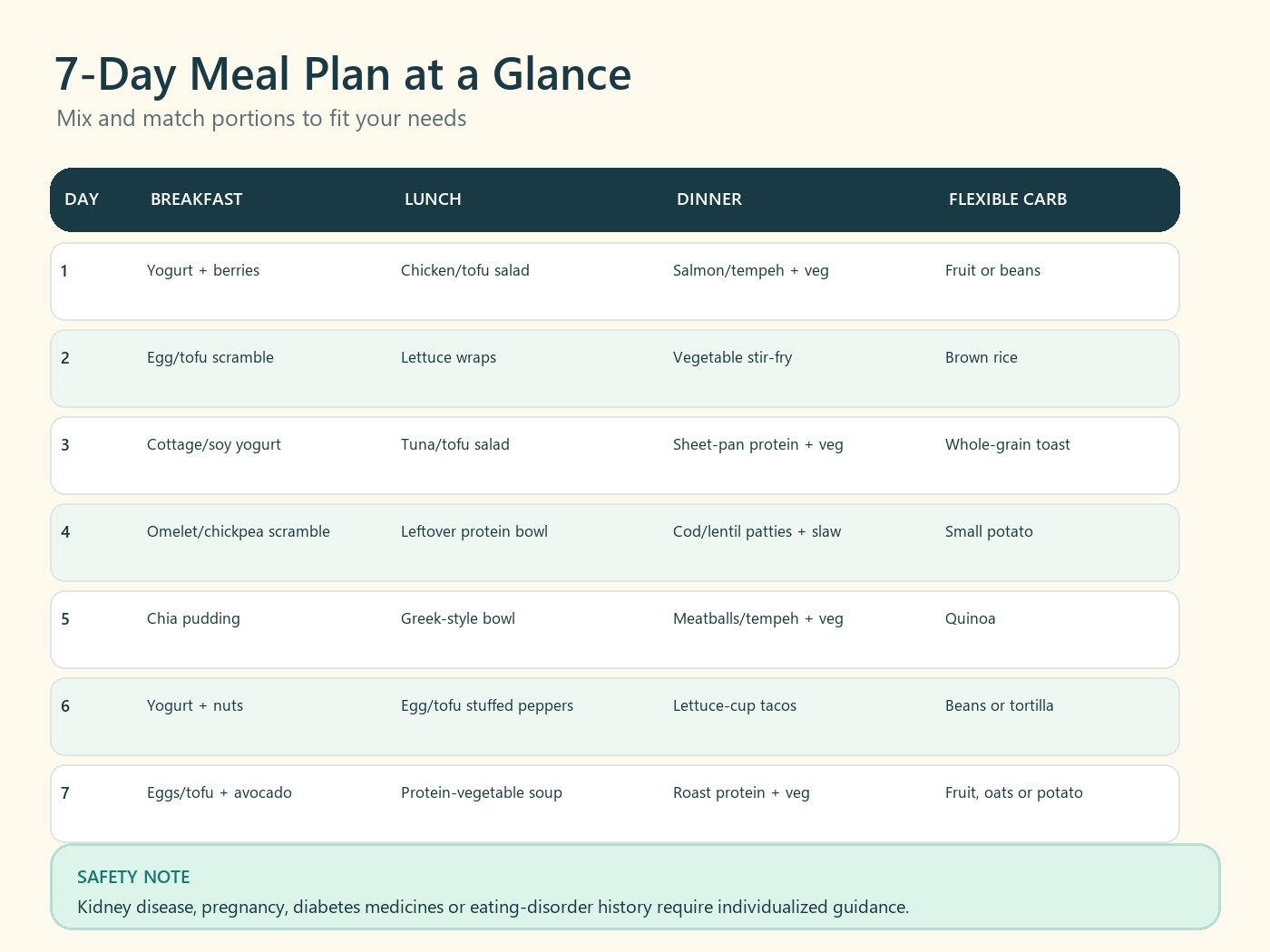
Easy 7-day high protein and low carb diet meal plan
This is a meal-building example, not a calorie-controlled prescription. Adjust portions, add a fiber-rich carbohydrate when needed and substitute for allergies or dietary preferences.
| Day | Breakfast | Lunch | Dinner | Optional snack or carb add-on |
|---|---|---|---|---|
| 1 | Plain Greek yogurt, berries, chia and walnuts | Chicken or tofu salad with cucumber, tomato and olive oil | Salmon or tempeh with broccoli and cauliflower mash | Apple, or 1/2 cup beans with lunch |
| 2 | Eggs or tofu scramble with spinach and mushrooms | Turkey lettuce wraps or chickpea salad cups | Beef, tofu or seitan stir-fry with mixed vegetables | Small serving of brown rice if desired |
| 3 | Cottage cheese or soy yogurt with berries and pumpkin seeds | Tuna-and-white-bean salad or mashed tofu salad | Sheet-pan chicken or tofu with zucchini and peppers | Whole-grain toast or fruit |
| 4 | Vegetable omelet or chickpea-flour scramble | Leftover protein bowl over greens | Baked cod or lentil patties with green beans and slaw | Small roasted potato |
| 5 | Chia seed pudding with plain yogurt and berries | Greek-style chicken or tofu bowl | Turkey meatballs or tempeh with tomato sauce and roasted eggplant | Quinoa or whole-grain bread |
| 6 | Plain yogurt or soy yogurt with nuts and cinnamon | Egg, tofu or chicken salad stuffed into peppers | Shrimp, fish or tofu tacos in lettuce cups with avocado salsa | Corn tortilla or black beans |
| 7 | Eggs, smoked salmon or tofu with tomatoes and avocado | Leftover vegetable-and-protein soup | Roast chicken, lean meat or baked tofu with mixed vegetables | Fruit, oats or sweet potato according to need |
How to adjust the plan
- More energy needed: add oats, fruit, beans, potato, brown rice or whole-grain bread.
- Vegetarian: use tofu, tempeh, edamame, seitan, Greek yogurt, eggs, beans and lentils.
- Dairy-free: choose unsweetened soy yogurt or another fortified alternative.
- Lower budget: use eggs, canned fish, dried or canned beans, tofu, frozen vegetables and store-brand yogurt.
- Higher activity: add carbohydrate before or after training rather than forcing a very-low-carb intake.
High protein and low carb diet vegetarian and budget swaps
| Instead of… | Try… |
|---|---|
| Chicken breast | Tofu, tempeh or seitan |
| Tuna or salmon | Edamame, tofu or lentil patties |
| Greek yogurt | Unsweetened soy yogurt |
| Cottage cheese | Tofu blended with lemon, herbs and seasoning |
| Expensive fresh fish | Canned salmon, sardines or tuna |
| Fresh out-of-season vegetables | Frozen vegetables |
| Packaged protein snack | Egg, yogurt, roasted edamame or a small handful of nuts |
Plant-based meals may include more carbohydrate because beans and lentils provide both carbohydrate and protein. That does not make them incompatible with a lower-carbohydrate pattern; adjust the rest of the plate rather than removing a useful source of fiber.
Will a high protein and low carb diet cause weight loss?
It may help some people manage hunger, but it does not override total energy intake, sleep, activity, medicines, health conditions or eating behavior. Early scale changes on a very-low-carb plan can include water loss as stored glycogen declines; that is not the same as rapid body-fat loss.
NIDDK advises choosing a weight-management approach that is backed by science and tailored to health, culture, preferences and values so it can be followed long term.[4] It also warns against programs promising dramatic weight loss without realistic lifestyle changes.[4]
Treat these claims cautiously:
- “Burn fat automatically”
- “Lose weight without counting portions”
- “Reset your hormones”
- “Reverse diabetes”
- “Detox in seven days”
A meal plan can organize food choices. It cannot guarantee a medical or weight outcome.
Who should get professional guidance first?
Talk with a clinician or registered dietitian before making a major protein or carbohydrate change if you:
- Have chronic kidney disease or reduced kidney function
- Use insulin or other glucose-lowering medicine
- Are pregnant or breastfeeding
- Are under 18
- Have a history of an eating disorder or highly restrictive dieting
- Have liver, pancreatic or gallbladder disease
- Have gout or another condition affected by dietary changes
- Train for endurance events or have unusually high energy needs
NIDDK notes that some people with chronic kidney disease may need moderate protein intake because protein metabolism creates waste the kidneys remove; too little protein can also contribute to malnutrition.[5] The right balance should be individualized with a qualified professional.[5]
A general internet plan should not replace medical nutrition therapy.
High protein and low carb diet meal prep and food safety
A simple 60-minute prep routine
- Cook two protein options, such as chicken plus tofu or eggs.
- Roast two trays of vegetables.
- Wash salad greens and prepare a simple dressing.
- Cook one flexible carbohydrate, such as quinoa, beans or potatoes.
- Portion snacks only if that makes your week easier.
Keep perishable meal-prep foods refrigerated promptly. The FDA recommends refrigerating perishables right away, following the two-hour rule for foods left at room temperature, and keeping the refrigerator at or below 40°F (4°C).[6]
For best quality, prepare only what you expect to use within a few days. Freeze extra cooked portions rather than keeping an entire week of cooked food in the refrigerator.
Frequently asked questions
Is a high protein and low carb diet the same as keto?
No. Ketogenic diets usually restrict carbohydrate much more aggressively to promote nutritional ketosis. This beginner plan allows flexible portions of fruit, beans, whole grains and starchy vegetables.
Do I need protein powder?
No. Many people can meet their needs with food. Protein powder may be convenient, but products vary in ingredients, sweeteners and third-party testing. It should not replace dietary variety.
Are beans too high in carbohydrates?
Beans contain carbohydrate, fiber and protein. Portion size can be adjusted, but they do not need to be automatically excluded from a lower-carb pattern.
Can I eat fruit?
Yes. Whole fruit provides nutrients and fiber. Choose portions that fit your preferences and any medical carbohydrate plan rather than assuming all fruit must be removed.
How quickly should I increase protein?
There is no universal schedule. Start by including a protein source at each meal and assess comfort, budget and overall balance. Sudden large changes can be difficult to sustain.
Can this diet improve blood sugar?
Reducing sugary drinks and refined carbohydrates may change post-meal glucose, but responses vary. If you use glucose-lowering medicine, major carbohydrate changes can require clinical monitoring and medication adjustment. Do not change medicine on your own.
Is very low carb better than moderately low carb?
Not automatically. The best approach is one that meets nutrient needs, supports your health and can be sustained. Very low intake may be harder to follow and may unnecessarily remove fiber-rich foods.
What if I feel tired, constipated or dizzy?
Review fluid intake, total food intake, fiber and carbohydrate adequacy. Stop the plan and seek medical advice for severe, persistent or rapidly worsening symptoms.
Bottom line
A sensible high protein and low carb diet is not a license to eat unlimited meat or eliminate every carbohydrate. Emphasize varied protein sources, vegetables, unsaturated fats and flexible portions of minimally processed carbohydrate. Use the seven-day plan as a template, then adapt it to your needs—or work with a registered dietitian when medical conditions or medications are involved.
Sources
[2] U.S. Office of Disease Prevention and Health Promotion, Dietary Guidelines for Americans, 2025–2030
[3] Harvard T.H. Chan School of Public Health, Protein
[6] U.S. Food and Drug Administration, Are You Storing Food Safely?
4 Responses