
A pot of vegetable soup can look “healthy” and still leave you searching for snacks an hour later. The missing pieces are usually enough protein, enough fiber and a portion that matches whether the soup is a starter or a meal.
This one pot soup for weight loss combines red lentils, tomatoes, carrots, celery and greens in a practical recipe that takes about 40 minutes. It is filling because it provides fluid, vegetables and pulses—not because cumin, turmeric or any other ingredient burns fat.
Quick answer: One quarter of the pot provides approximately 270 calories, 15 grams of protein and 9 grams of fiber. One sixth provides about 180 calories, 10 grams of protein and 6 grams of fiber. These are rounded estimates, not laboratory results. No soup causes weight loss by itself; this recipe can fit a sustainable reduced-calorie pattern when the serving and the rest of the meal suit your needs.
Editorial note: This article provides general nutrition education and has not been medically reviewed. It is not a personalized weight-loss prescription. Calorie, protein and fiber estimates use generic USDA FoodData Central values and the listed ingredient weights; brands and portions vary. Speak with a qualified clinician or registered dietitian if you have kidney disease, diabetes medication, a medically prescribed sodium or fluid limit, pregnancy, an eating-disorder history or unintentional weight loss. Read our editorial and corrections policy.
Table of contents
- Can soup support weight management?
- Ingredients and nutrition assumptions
- Six-step recipe
- Nutrition per serving
- How to make the soup more filling
- Substitutions
- Troubleshooting
- Storage and meal prep
- Who should modify the recipe
- Frequently asked questions
Can one pot soup for weight loss actually help?
The recipe can support a weight-management eating pattern, but the wording matters. It does not “melt fat,” detox the body or speed metabolism.
What soup research shows
In a laboratory study of 60 adults, eating a low-energy-dense soup before lunch reduced total meal energy intake compared with having no soup.[5] The study tested soup as a required preload before one meal. It did not prove that soup produces long-term weight loss, and it did not test this exact recipe.
The practical takeaway is modest: a broth-based vegetable soup may help some people moderate intake at that meal. This does not make every one pot soup for weight loss equally useful. A soup containing large amounts of cream, oil, cheese or oversized sides can have a very different energy density.
What lentil and pulse research shows
A systematic review of nine acute trials found that pulses such as beans, peas, chickpeas and lentils increased reported short-term satiety but did not significantly reduce intake at the next meal.[6] The researchers also noted limitations including small samples and narrow participant groups.[6]
A separate meta-analysis of 21 trials found a modest average weight difference favoring diets containing pulses over a median of six weeks.[7] That result concerned broader dietary patterns—not a special effect from red lentil soup—and it does not predict an individual outcome.
What this means for the recipe
This one pot soup for weight loss offers features that can be useful:
- Vegetables and broth create volume
- Lentils provide plant protein, carbohydrate and fiber
- A measured amount of oil adds flavor without dominating the pot
- The recipe is easy to portion and reheat
Weight change still depends on the whole pattern of food, activity, sleep, medicines and individual biology. NIDDK recommends a science-based plan that fits a person’s health, culture, preferences and values so it can be maintained.[4]
One pot soup for weight loss ingredients
This one pot soup for weight loss uses ordinary ingredients and one measured tablespoon of oil rather than relying on specialty powders or “detox” additions.
Ingredients for one large pot
| Ingredient | Amount | Practical role |
|---|---|---|
| Dry red lentils | 1 cup, about 190–200 g | Plant protein, fiber and body |
| Olive oil | 1 tablespoon | Flavor and sautéing |
| Yellow onion | 1 medium, diced | Flavor and vegetable volume |
| Garlic | 3 cloves, minced | Flavor |
| Carrots | 2 medium, diced | Color, texture and produce |
| Celery | 2 stalks, diced | Flavor and volume |
| No-salt-added diced tomatoes | 1 can, about 400 g | Acidity, flavor and produce |
| Lower-sodium vegetable broth | 4 cups | Cooking liquid |
| Ground cumin | 1 teaspoon | Flavor |
| Turmeric | 1/2 teaspoon | Color and flavor |
| Black pepper | 1/4 teaspoon, or to taste | Flavor |
| Spinach or kale | 2 packed cups, about 60 g | Leafy vegetables |
| Lemon juice | 1 tablespoon | Brightness |
| Salt | Optional, to taste after cooking | Seasoning control |
The Dietary Guidelines for Americans, 2025–2030, emphasize whole, nutrient-dense foods including vegetables, protein foods, fruits, healthy fats and whole grains.[2] Lentils are pulses and provide protein, complex carbohydrate and fiber.[3]
Nutrition-estimate method
The one pot soup for weight loss nutrition estimates in this article use:
- Approximately 192 g dry red lentils
- 13.5 g olive oil
- The listed vegetable weights
- About 60 calories for four cups of broth
- Generic USDA food-composition values[9]
Broth, canned tomatoes and lentils vary by brand. If precise tracking is important, enter your exact ingredient labels and finished yield into a reputable recipe calculator.
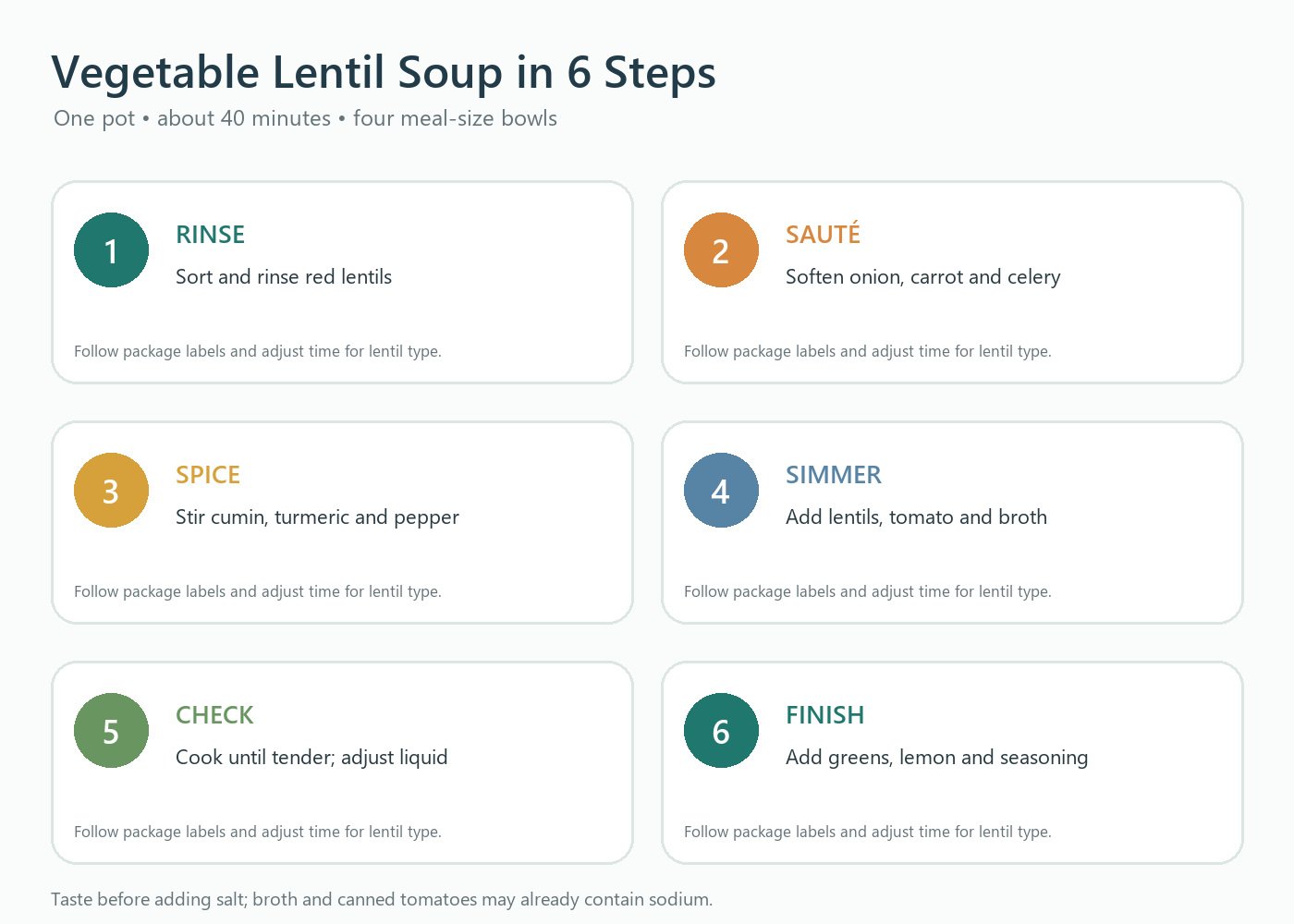
Easy 6-step vegetable lentil soup recipe
Prepare the one pot soup for weight loss in the following six practical steps.
Preparation time: About 15 minutes
Cooking time: About 25 minutes
Yield: Four meal-size bowls or six lighter bowls
1. Rinse and sort the lentils
Put the dry red lentils in a fine-mesh strainer. Check for debris, then rinse under cool running water until the water is less cloudy. Red lentils do not require an overnight soak.
2. Sauté the vegetables
Heat the olive oil in a large pot over medium heat. Add onion, carrots and celery. Cook for about five to six minutes, stirring occasionally, until they begin to soften.
Add the garlic and cook for about 30 seconds. Avoid browning it heavily, which can make the soup bitter.
3. Bloom the spices
Add cumin, turmeric and black pepper. Stir for about 30 seconds so the spices coat the vegetables.
The spices add flavor and color. This one pot soup for weight loss does not rely on “metabolism-boosting” spice claims.
4. Add lentils, tomatoes and broth
Stir in the rinsed lentils, diced tomatoes and vegetable broth. Scrape the bottom of the pot so nothing sticks.
Bring to a gentle boil, then lower the heat to maintain a steady simmer.
5. Simmer until tender
Cook uncovered or partially covered for approximately 20 to 25 minutes. Stir every few minutes, especially near the end as red lentils break down and thicken the soup.
If it becomes thicker than you prefer, add water or broth in 1/4-cup increments.
6. Add greens and finish
Stir in spinach or kale during the final three to five minutes. Remove the pot from the heat and add lemon juice.
Taste before adding salt. Broth and canned tomatoes may already supply enough sodium.
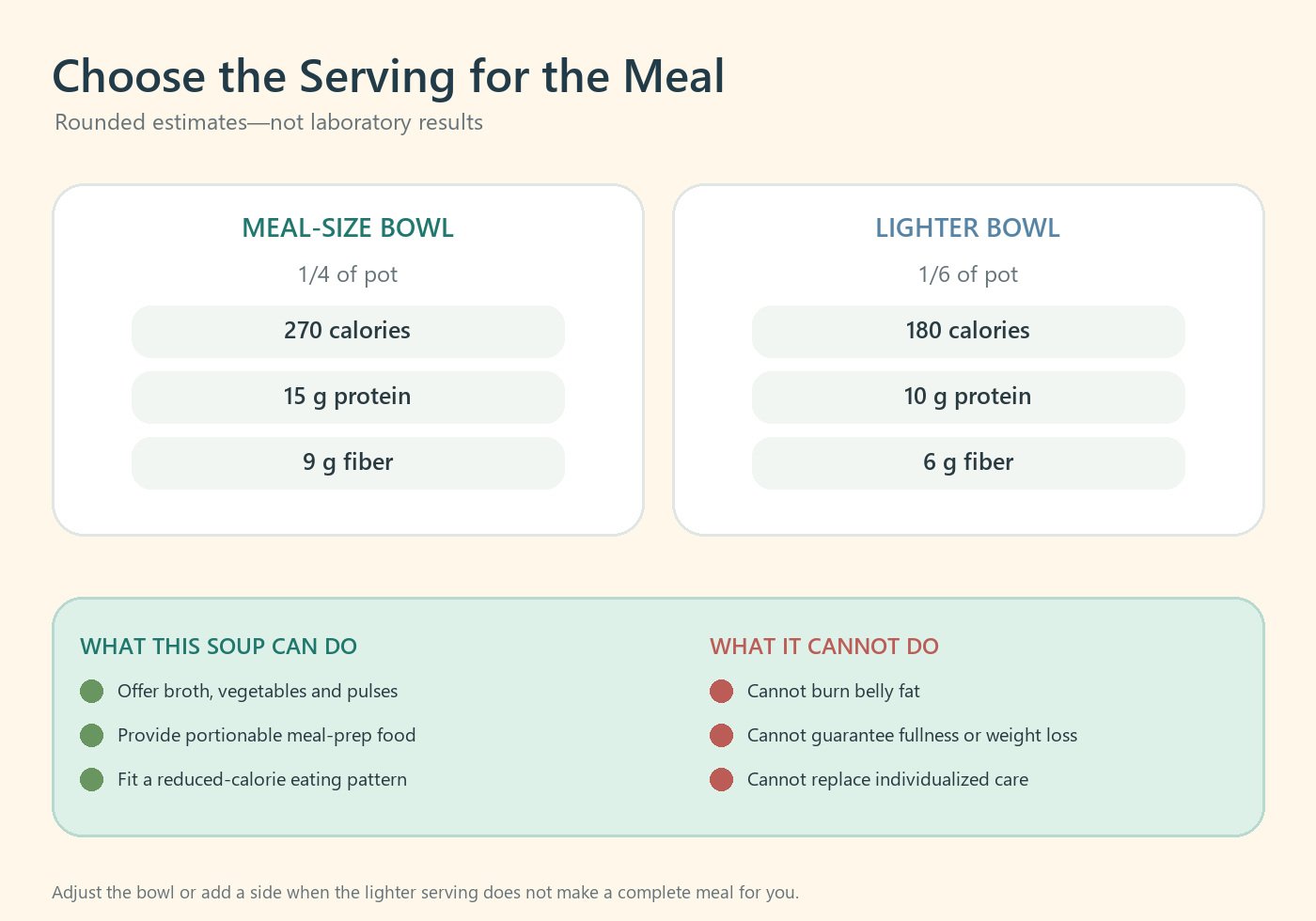
One pot soup nutrition per serving
| Serving size | Approx. calories | Approx. protein | Approx. fiber | Best used as |
|---|---|---|---|---|
| 1/4 of the pot | 270 | 15 g | 9 g | Light meal or substantial lunch base |
| 1/6 of the pot | 180 | 10 g | 6 g | Starter, snack or side |
The whole pot is estimated at approximately 1,080 calories, 59 grams of protein and 35 grams of fiber. Values are rounded.
Is 15 grams of protein enough for a meal?
It depends on the person and the rest of the meal. For someone wanting more protein, pair the one pot soup for weight loss meal-size bowl with one of the following:
- Plain Greek yogurt on the side
- Tofu cubes stirred into the soup
- Cooked chicken added to the bowl
- A half sandwich with a protein filling
- An additional portion of lentils if tolerated
Every addition changes the calorie, protein, fiber and sodium totals.
For other practical meal formulas, see our high-protein and lower-carbohydrate guide and low-calorie high-protein breakfast ideas.
How to make one pot soup for weight loss more filling
Use the meal-size portion when it is the main dish
One sixth of the pot may work as a starter but can be too small for a complete meal. Calling the soup “low calorie” does not mean choosing the smallest possible bowl.
Keep the lentils
Replacing lentils with zucchini or cauliflower lowers calories, but it also removes much of the recipe’s protein and fiber. If you reduce lentils, add another satisfying component.
Add vegetables without removing all energy sources
Extra spinach, cabbage, mushrooms or zucchini can increase volume. They should supplement—not automatically replace—protein, carbohydrate and fat.
Pair the soup intentionally
A large piece of buttered bread, cheese-heavy side or oversized dessert can change the meal’s total energy substantially. That does not make those foods forbidden; it means the whole meal matters.
Eat at a comfortable pace
A warm soup may naturally take time to eat, but there is no required number of minutes. Pay attention to comfort and fullness rather than trying to force a particular eating speed.
Lentil soup substitutions and variations
Use these one pot soup for weight loss variations to change texture, protein or sodium while keeping the recipe’s limitations clear.
Brown or green lentils
Use the same approximate dry amount, but expect a longer cooking time and a firmer texture. Add extra liquid as needed.
Canned lentils
Use about two drained and rinsed cans. Add them after the vegetables and tomatoes, then simmer for approximately 10 minutes. Protein, fiber and sodium will differ from the dry-lentil version.
Chicken lentil soup
Add cooked shredded chicken near the end and heat it thoroughly. This raises protein and calories.
Tofu vegetable soup
Add firm tofu cubes with the greens. Stir gently so the cubes hold their shape.
Spicier version
Add chili flakes, cayenne or diced jalapeño according to tolerance. Spiciness changes flavor—not fat loss.
Creamier texture without cream
Blend one or two cups of the finished soup, then stir the puree back into the pot. Use caution with hot liquid and follow your blender’s safety directions.
Lower-sodium version
- Use no-salt-added tomatoes
- Choose lower-sodium broth
- Rinse canned lentils
- Season with lemon, herbs and pepper before adding salt
One pot soup troubleshooting
Most one pot soup for weight loss problems come from liquid ratio, cooking time or seasoning rather than the lentils themselves.
The soup is too thick
Red lentils continue absorbing liquid as they cook and cool. Add water or broth gradually until the desired consistency returns.
The lentils are still firm
Continue simmering and add liquid if the pot looks dry. Old lentils and acidic ingredients can sometimes extend cooking time.
The soup tastes flat
Add lemon juice, black pepper, herbs or a small amount of salt. Acidity often improves flavor without requiring more oil.
The soup is bitter
Burned garlic or spices may be responsible. Cook garlic briefly and keep the heat moderate when adding spices.
The soup causes bloating
Lentils contain fiber and fermentable carbohydrates that can cause gas or cramping in some people.[3] Start with a smaller portion if your usual fiber intake is low. Persistent or severe digestive symptoms need professional assessment.
Storage and high-fiber meal prep
Cool the one pot soup for weight loss leftovers promptly and transfer them to shallow, covered containers. The FDA advises refrigerating or freezing perishable foods promptly, following the two-hour rule and keeping the refrigerator at or below 40°F (4°C).[8]
Refrigerator
Use refrigerated soup within a few days. Reheat only the amount you need and bring it to a thoroughly hot temperature.
Freezer
Freeze individual portions if you will not use the soup soon. Leave space in the container for expansion and label it with the date.
Reheating
The soup will thicken in storage. Add a splash of water or broth and stir while reheating.
Who should modify this recipe?
This one pot soup for weight loss may require adjustment if you:
- Have a medically prescribed low-potassium, low-phosphorus, low-fiber or low-sodium diet
- Need a fluid restriction
- Use diabetes medication affected by carbohydrate intake
- Have an eating-disorder history
- Are pregnant, breastfeeding, under 18 or unintentionally losing weight
- Have difficulty swallowing
- Experience severe or persistent digestive symptoms with legumes
This one pot soup for weight loss should not replace individualized medical nutrition therapy.
Frequently asked questions
Does one pot soup for weight loss burn fat?
No. The soup does not directly burn fat. It may fit a reduced-calorie eating pattern because it combines broth, vegetables and lentils in a portionable meal.
Can I eat lentil soup every day?
It can be included regularly, but dietary variety still matters. Rotate vegetables, proteins, grains and other foods across the week.
Can I use this soup as my only meal?
The meal-size portion is relatively light and supplies about 15 grams of estimated protein. Some people will need a larger serving or an additional protein, carbohydrate or fat source.
Are canned lentils as healthy as dry lentils?
Both can fit a balanced diet. Canned lentils are convenient and already cooked. Sodium varies, so drain, rinse and compare labels when relevant.
Is this soup low carb?
No. Lentils supply carbohydrate along with fiber and protein. That combination can be useful, but it is not a very-low-carbohydrate recipe.
Can I make the soup without oil?
Yes. Sauté vegetables in a small amount of broth or water. The flavor and estimated calories will change.
Can I make it in a slow cooker?
Yes. Add all ingredients except the greens and lemon juice. Cook until the lentils and vegetables are tender, then add greens near the end and lemon after cooking. Slow-cooker times vary by appliance.
Can I freeze vegetable lentil soup?
Yes. Cool it promptly, portion it into freezer-safe containers and label the date. The texture may thicken after thawing.
How can I increase the protein?
Add chicken, tofu, more lentils or a protein-containing side. Recalculate nutrition with your actual amounts.
Will lentils guarantee weight loss?
No. Pulse research suggests possible modest benefits within broader dietary patterns, but no individual food guarantees an outcome.[7]
Bottom line
A useful one pot soup for weight loss is not a detox or fat-burning trick. This vegetable lentil recipe offers a high-volume, fiber-rich meal that is easy to portion, adapt and prepare ahead. Use the larger serving when it is the main meal, add protein or sides when needed, and judge the recipe by how well it supports a sustainable overall eating pattern.
Sources
[2] U.S. Office of Disease Prevention and Health Promotion, Dietary Guidelines for Americans, 2025–2030
[3] Harvard T.H. Chan School of Public Health, Legumes and Pulses
[5] Flood JE, Rolls BJ, Soup preloads in a variety of forms reduce meal energy intake
[8] U.S. Food and Drug Administration, Are You Storing Food Safely?