Ulcerative colitis meal plans often promise to “calm inflammation” with a short list of supposedly safe foods. That promise is too simple. Food choices may affect symptoms and nutrition, but a menu cannot switch off inflammation or replace ulcerative colitis treatment.
This 7-day meal plan for ulcerative colitis takes a safer approach: flexible meals, texture swaps, hydration reminders and ways to adjust portions when appetite or bowel symptoms change. Use it as a planning template with your gastroenterology team or registered dietitian—not as a prescription.
Quick answer: There is no universal ulcerative colitis diet. NIDDK says researchers have not found that specific foods worsen ulcerative colitis and recommends discussing personal food-symptom patterns with a clinician.[1] A useful plan supports adequate energy, protein, fluids and tolerated variety while medical treatment controls the disease.
Editorial note (updated September 16, 2026): Source-checked by the NutriQuora Editorial Team. This article has not been medically reviewed. It is general education and cannot diagnose ulcerative colitis or manage a flare.
Before using this 7-day meal plan for ulcerative colitis
Ulcerative colitis is an inflammatory bowel disease affecting the large intestine. Common symptoms include diarrhea, rectal bleeding and abdominal pain, though symptoms vary between people.[4] Symptoms and food tolerance can change between remission and a flare. Treatment is individualized according to disease severity and how much of the colon is affected.[2]
NIDDK states that doctors treat ulcerative colitis with medicines and, when needed, surgery.[2] Food does not replace anti-inflammatory medicine, immune-modifying treatment, biologic therapy, hospital care or surgery.
Contact your care team before making major dietary restrictions, especially if you have ongoing diarrhea, bleeding, unplanned weight loss, anemia, dehydration, pregnancy, diabetes, kidney disease, food allergies or a history of disordered eating.
Ulcerative colitis is not the same as a peptic ulcer or gastritis. If your diagnosis is different, use NutriQuora’s 7-day meal plan for ulcers or 7-day gastritis meal plan for the appropriate condition-specific context.
What this plan can do
- Reduce day-to-day meal-planning effort
- Offer softer and lower-fiber swaps when rough textures worsen symptoms
- Support regular fluids, energy and protein
- Help you document personal food, portion and timing patterns
- Give you questions to discuss with your gastroenterology team or dietitian
What this plan cannot do
- Diagnose a flare or determine disease severity
- Stop intestinal inflammation
- Guarantee fewer bowel movements or less bleeding
- Replace prescribed treatment
- Meet every person’s nutritional needs without individual assessment
How to personalize the plan
Use this 7-day meal plan for ulcerative colitis as a menu of options rather than a strict sequence.
- Start with your current tolerance. A food that works in remission may not feel comfortable during active symptoms.
- Adjust texture before eliminating a food group. Peel, cook, mash or blend produce if raw or coarse textures are difficult.
- Use smaller meals if needed. Smaller portions plus planned snacks may be easier when appetite is low.
- Prioritize fluids. Diarrhea can increase fluid losses. The NHS advises drinking plenty of fluids to stay hydrated when you have diarrhea.[3]
- Keep a short food-and-symptom record. Both NIDDK and the NHS describe food diaries as a way to identify personal patterns, while advising clinician input before major changes.[1][3]
- Do not stop medicine when symptoms improve. The NHS advises continuing prescribed medicine even when you feel well.[3]
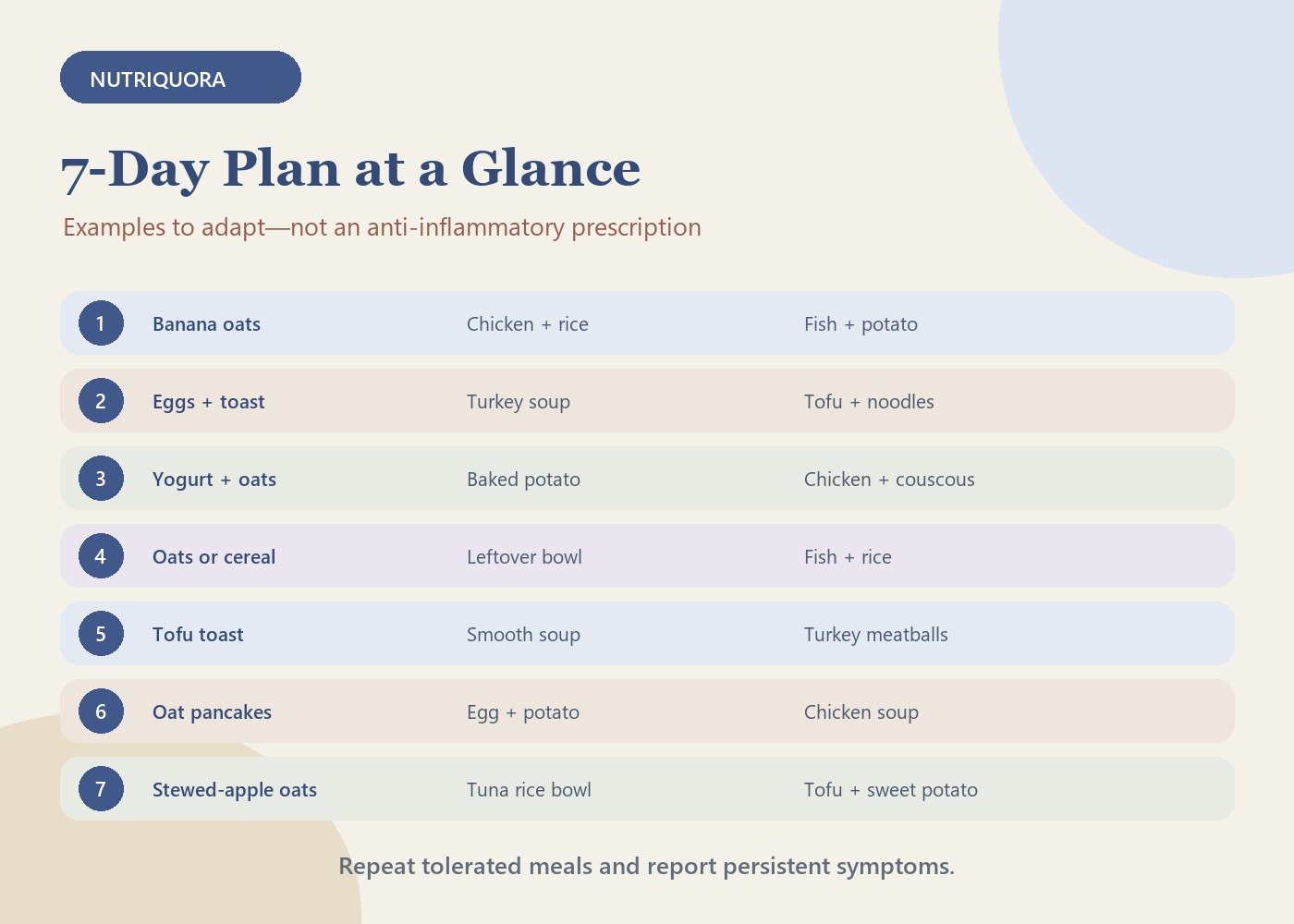
7-day meal plan for ulcerative colitis at a glance
The 7-day meal plan for ulcerative colitis below is intentionally flexible so each meal can be adjusted for current symptoms and professional advice.
| Day | Breakfast | Lunch | Dinner | Optional snack |
|---|---|---|---|---|
| 1 | Banana oatmeal | Chicken-and-rice bowl | Baked fish, potato and carrots | Yogurt or lactose-free alternative |
| 2 | Soft eggs and toast | Turkey-and-rice soup | Tofu noodles with cooked spinach | Banana with smooth nut butter |
| 3 | Yogurt-oat bowl | Baked potato with cottage cheese or tofu | Chicken, couscous and zucchini | Applesauce with crackers |
| 4 | Overnight oats or rice cereal | Leftover chicken bowl | White fish with rice and green beans | Melon or yogurt |
| 5 | Scrambled tofu on toast | Smooth lentil soup or chicken soup | Turkey meatballs with pasta | Soft pear with ricotta |
| 6 | Oat pancakes | Egg-and-potato bowl | Chicken-and-rice soup | Yogurt or fortified alternative |
| 7 | Warm oats with stewed apple | Tuna or mashed-chickpea rice bowl | Baked tofu with sweet potato | Banana-oat smoothie |
These foods are examples, not “anti-inflammatory cures.” Replace anything that conflicts with allergies, treatment advice, cultural preferences or personal tolerance.
Day-by-day meals and swaps
Day 1: begin with familiar foods
- Breakfast: Oats cooked until soft with banana.
- Lunch: Rice bowl with shredded chicken and cooked carrots.
- Dinner: Baked fish, mashed potato and tender carrots.
- Snack: Plain yogurt or a lactose-free fortified alternative.
Swap: Use tofu instead of chicken or fish. If oats are uncomfortable, try a lower-fiber hot cereal recommended by your care team.
Day 2: build in fluids
Day 2 of the 7-day meal plan for ulcerative colitis uses soup as a simple way to combine fluid, starch and protein.
- Breakfast: Soft scrambled eggs with toast.
- Lunch: Turkey-and-rice soup with tender carrots.
- Dinner: Tofu with soft noodles and cooked spinach.
- Snack: Banana with a thin layer of smooth nut butter.
Persistent diarrhea, dizziness, reduced urination or difficulty keeping fluids down requires clinical advice; a meal plan is not enough.
Day 3: test dairy rather than banning it automatically
Day 3 of the 7-day meal plan for ulcerative colitis keeps dairy optional rather than assuming it is suitable or unsuitable for everyone.
- Breakfast: Plain yogurt with oats and soft fruit.
- Lunch: Baked potato with cottage cheese and cooked spinach.
- Dinner: Chicken, couscous and tender zucchini.
- Snack: Applesauce with plain crackers.
Some people tolerate dairy, while others experience more gas, bloating or diarrhea. Try lactose-free dairy or a fortified plant alternative if needed.
Day 4: use safe leftovers
Planned leftovers make the 7-day meal plan for ulcerative colitis easier to maintain when fatigue or appetite makes cooking difficult.
- Breakfast: Overnight oats or a tolerated hot cereal.
- Lunch: Leftover chicken-and-couscous bowl.
- Dinner: White fish with rice and cooked green beans.
- Snack: Melon or yogurt.
Refrigerate perishable leftovers promptly and reheat them thoroughly. Immunosuppressive treatment can make food-safety practices especially important; ask your care team about any extra precautions.
Day 5: approach legumes gradually
- Breakfast: Scrambled tofu on toast.
- Lunch: Smooth lentil soup or chicken-and-rice soup.
- Dinner: Turkey meatballs with pasta and tender zucchini.
- Snack: Soft pear with ricotta or a dairy-free alternative.
Legumes are nutritious but may increase gas for some people. Start with a small portion, try a smooth texture or replace them with another protein.
Day 6: repeat foods that worked
- Breakfast: Oat pancakes with banana.
- Lunch: Egg-and-potato bowl with cooked spinach.
- Dinner: Chicken-and-rice soup.
- Snack: Yogurt or a fortified alternative.
A practical 7-day meal plan for ulcerative colitis should become easier by repeating tolerated meals—not more restrictive with each day.
Day 7: build a reusable rotation
- Breakfast: Warm oats with stewed apple.
- Lunch: Tuna-and-rice bowl or mashed-chickpea version.
- Dinner: Baked tofu, sweet potato and tender green beans.
- Snack: Banana-oat smoothie.
At the end of the week, list two breakfasts, two lunches and two dinners you can repeat. Share persistent symptoms and your food record with your care team.
During a flare versus remission
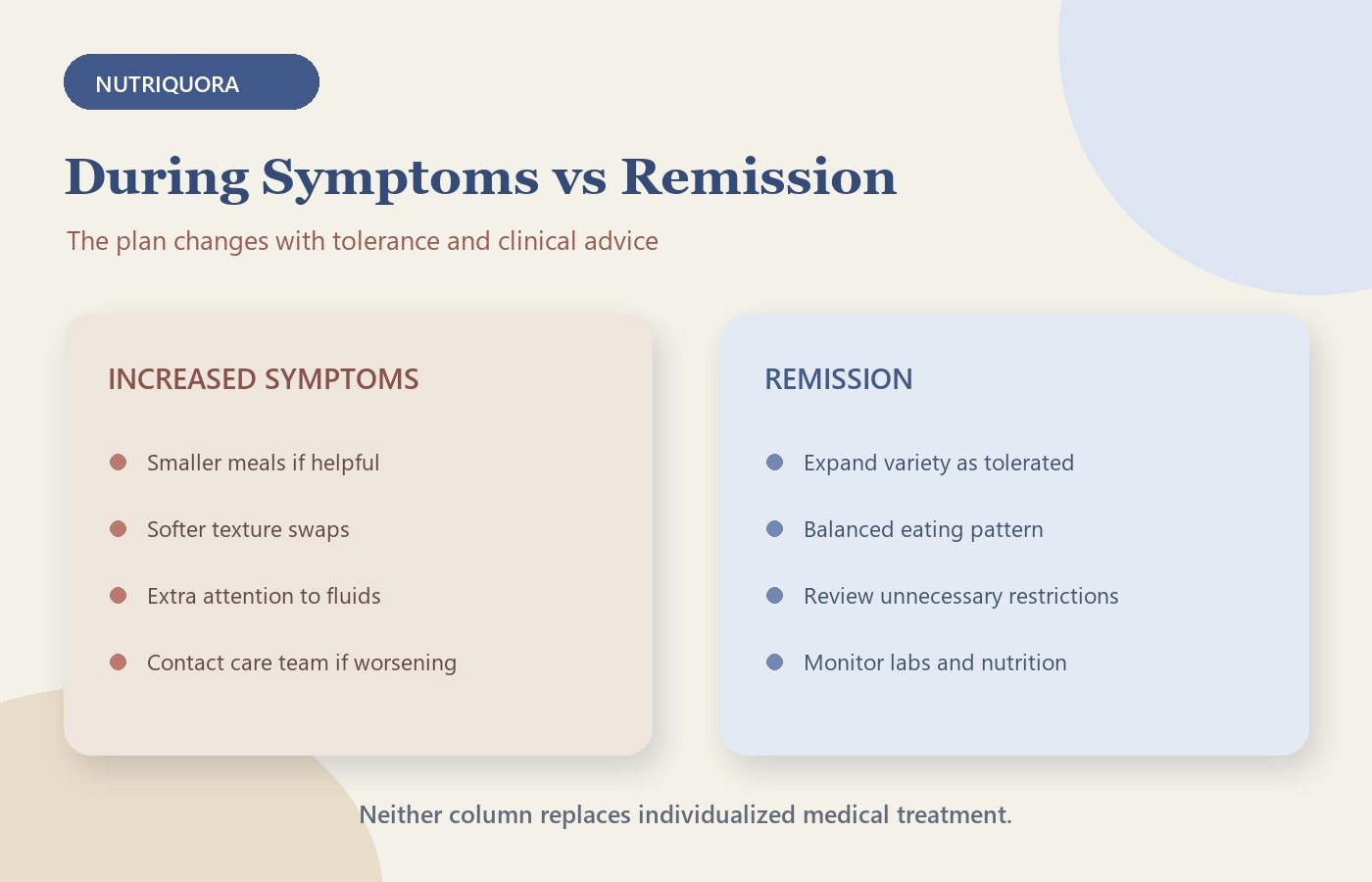
How you use the 7-day meal plan for ulcerative colitis may change between increased symptoms and remission.
During increased symptoms
A clinician or IBD dietitian may suggest temporary changes based on diarrhea, pain, strictures, recent surgery, weight loss or other factors. Examples can include softer textures, smaller meals or reducing specific high-residue foods for a limited period.
Do not assume everyone with ulcerative colitis must avoid fiber, vegetables, dairy, gluten or legumes. NIDDK says specific foods have not been shown to worsen ulcerative colitis for everyone.[1]
During remission
Aim to expand variety as tolerated and work toward a healthy, balanced eating pattern. NIDDK recommends a healthy, well-balanced diet and notes that reduced appetite and intake can lead to inadequate nutrition.[1]
If you have removed several food groups, ask a registered dietitian how to restore variety safely and assess whether supplements are necessary.
Nutrition issues worth discussing with your care team
This 7-day meal plan for ulcerative colitis cannot determine whether your intake meets your individual energy, protein, vitamin, mineral or hydration needs.
Ulcerative colitis can affect appetite, intake and nutrient status. The right assessment depends on symptoms, disease activity, medicines and laboratory results.
Discuss:
- Unplanned weight loss or difficulty maintaining weight
- Iron deficiency or anemia
- Vitamin D, calcium, vitamin B12 or folate concerns
- Persistent diarrhea or dehydration
- Whether oral nutrition supplements are appropriate
- Food safety while taking immune-suppressing medicine
- Growth and development in children or teenagers
Do not start high-dose supplements because an online list labels them “good for colitis.” Supplements can interact with treatment or be unnecessary.
Claims this guide does not make
“Fish and olive oil stop the swelling”
Fish and olive oil can fit a balanced eating pattern, but this 7-day meal plan for ulcerative colitis does not claim that they stop intestinal inflammation. Disease activity is assessed and treated medically.
“Everyone definitely needs extra protein”
Protein needs vary with body size, intake, disease activity, surgery, wounds and other conditions. Include regular protein foods, but obtain individualized targets if you are losing weight or recovering from severe illness.
“Blended food helps right away”
A smoother texture may feel easier for some people, but blending food does not guarantee immediate symptom relief or treat a flare.
“Soft foods cannot hurt your stomach”
No food is universally symptom-free. Even soft foods may be unsuitable because of lactose intolerance, allergies, portion size, fat content or personal response.
When to seek medical help
The NHS advises urgent medical help for very bad diarrhea with bleeding, a high temperature and a rapid heartbeat, or severe tummy pain.[3] Severe flares may require emergency hospital treatment.[3]
Contact your gastroenterology team promptly for worsening bleeding, persistent vomiting, signs of dehydration, rapid unplanned weight loss, inability to eat or drink, or symptoms that are not responding to your treatment plan.
NIDDK notes that severe and fulminant ulcerative colitis is often treated in hospital and that IV fluids and electrolytes may be used to prevent or treat dehydration.[2]
Frequently asked questions
Can a 7-day meal plan for ulcerative colitis stop a flare?
No. Meals can support nutrition and symptom tolerance, but a flare requires medical assessment and treatment. Do not delay contacting your care team because you are trying a new menu.
Should I follow a low-fiber diet?
Not automatically. A clinician may recommend a temporary change for specific symptoms or complications. Long-term broad restriction without guidance can reduce diet quality.
Are dairy products forbidden?
No. Some people tolerate dairy, while others do better with lactose-free products or fortified alternatives. Personal tolerance and nutritional needs matter.
Do I need extra protein?
Include protein regularly, but the amount should reflect your body, intake, disease activity and recovery needs. Ask a dietitian for a personalized target if you are losing weight or have severe disease.
What should I drink during diarrhea?
Water and other tolerated fluids can help, but significant fluid or electrolyte loss may require medical advice or an oral rehydration product. Seek care for dizziness, reduced urination, inability to keep fluids down or severe ongoing diarrhea.
Is this plan suitable after surgery?
Not necessarily. After bowel surgery, diet progression and hydration needs can be different. Follow your surgical and IBD team’s instructions.
The bottom line
A responsible 7-day meal plan for ulcerative colitis supports nutrition, hydration and personal symptom tracking without promising to stop inflammation. Keep the plan flexible, avoid unnecessary long-term restrictions, continue prescribed treatment and seek medical help when symptoms worsen.
Use the 7-day meal plan for ulcerative colitis to simplify food decisions—not to delay flare assessment, treatment changes or follow-up care.
How this article was created
NutriQuora used research-assisted drafting to rebuild the original article around practical reader questions and safer medical boundaries. The final content was edited for clarity and checked against NIDDK and NHS guidance. Claims that particular foods stop inflammation or produce immediate relief were removed. This article has not been medically reviewed.
Sources
[1] NIDDK. Eating, Diet, & Nutrition for Ulcerative Colitis.
[2] NIDDK. Treatment for Ulcerative Colitis.
[3] NHS. Ulcerative colitis.
[4] NIDDK. Symptoms & Causes of Ulcerative Colitis.