Ulcer meal advice often arrives as a long list of foods to ban. That can make an already uncomfortable week feel harder than it needs to be. The evidence is more reassuring: there is no special diet proven to cause, prevent or treat peptic ulcers.[1]
This 7-day meal plan for ulcers is therefore a practical eating template—not a treatment plan. It gives you regular meals, softer options, flexible swaps and enough variety to support nutrition while you follow the treatment prescribed for the cause of your ulcer.
Quick answer: A useful 7-day meal plan for ulcers emphasizes foods you personally tolerate, regular meals, adequate protein and energy, and simple preparation. It does not eradicate H. pylori, replace acid-reducing medicine or “heal” an ulcer on its own.
Editorial note (updated September 15, 2026): Source-checked by the NutriQuora Editorial Team. This article has not been medically reviewed. It is general education and cannot diagnose or treat an ulcer.
Before you use this 7-day meal plan for ulcers
A peptic ulcer is a sore in the lining of the stomach or duodenum. The most common causes are Helicobacter pylori (H. pylori) infection and nonsteroidal anti-inflammatory drugs (NSAIDs).[2]
Treatment depends on the cause.[4] NIDDK explains that H. pylori treatment commonly includes two or more antibiotics plus a proton pump inhibitor (PPI), sometimes with bismuth. NSAID-related ulcers may require clinician-directed changes to the medicine and acid-reducing treatment.[3]
Do not stop aspirin, ibuprofen, naproxen or another prescribed medicine without speaking with the clinician who recommended it. Do not use this meal plan instead of prescribed antibiotics or acid-control medicine.
A peptic ulcer is also different from gastritis, which is inflammation of the stomach lining. If gastritis—not an ulcer—is your diagnosis, see NutriQuora’s 7-day gastritis meal plan for a condition-specific discussion.
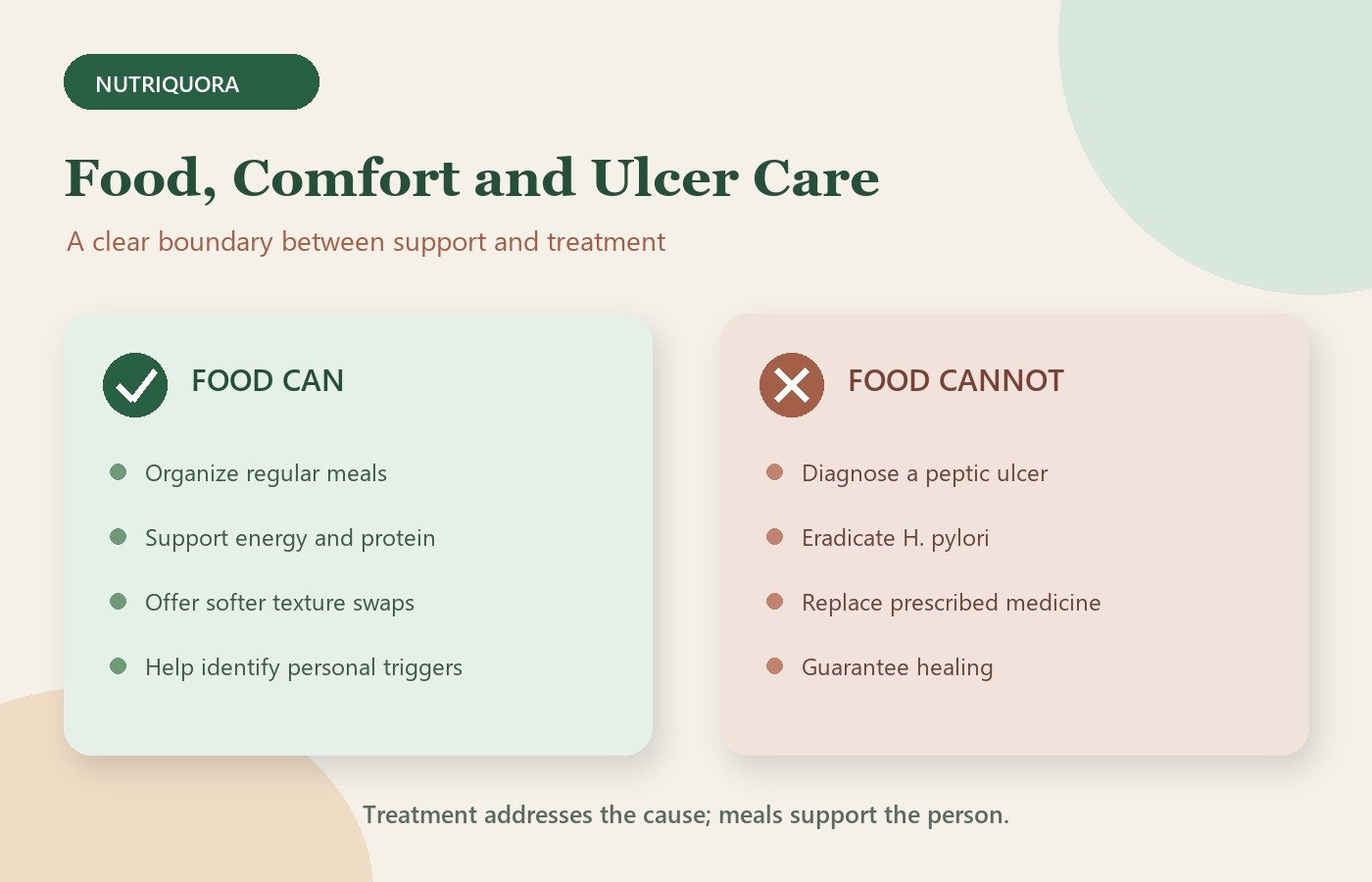
What food can do
- Make meals easier to organize when appetite is low
- Help you maintain energy, protein and fluid intake
- Let you identify foods, portions or meal timing that worsen your own symptoms
- Provide softer or milder alternatives during a difficult period
What food cannot do
- Confirm whether you have an ulcer
- Identify whether H. pylori or an NSAID is the cause
- Replace an endoscopy, breath test, stool test or clinical evaluation
- Guarantee healing or prevent complications
How to use the plan without over-restricting
Use this 7-day meal plan for ulcers as a starting point and change it to match your culture, budget, allergies, appetite and medical needs.
- Keep portions comfortable. If a full plate worsens discomfort, try a smaller meal and a planned snack later.
- Choose a tolerable texture. Soft, cooked or blended foods may feel easier for some people, but they do not heal an ulcer faster.
- Track personal triggers. Record the food, portion, timing, medicine timing and symptoms. One person may tolerate tomatoes, coffee or spice while another does not.
- Keep nutrition broad. Avoid only what clearly worsens symptoms or what your clinician has asked you to avoid.
- Follow your treatment plan. Complete prescribed antibiotics exactly as directed and attend follow-up testing when recommended.[3]
7-day meal plan for ulcers at a glance
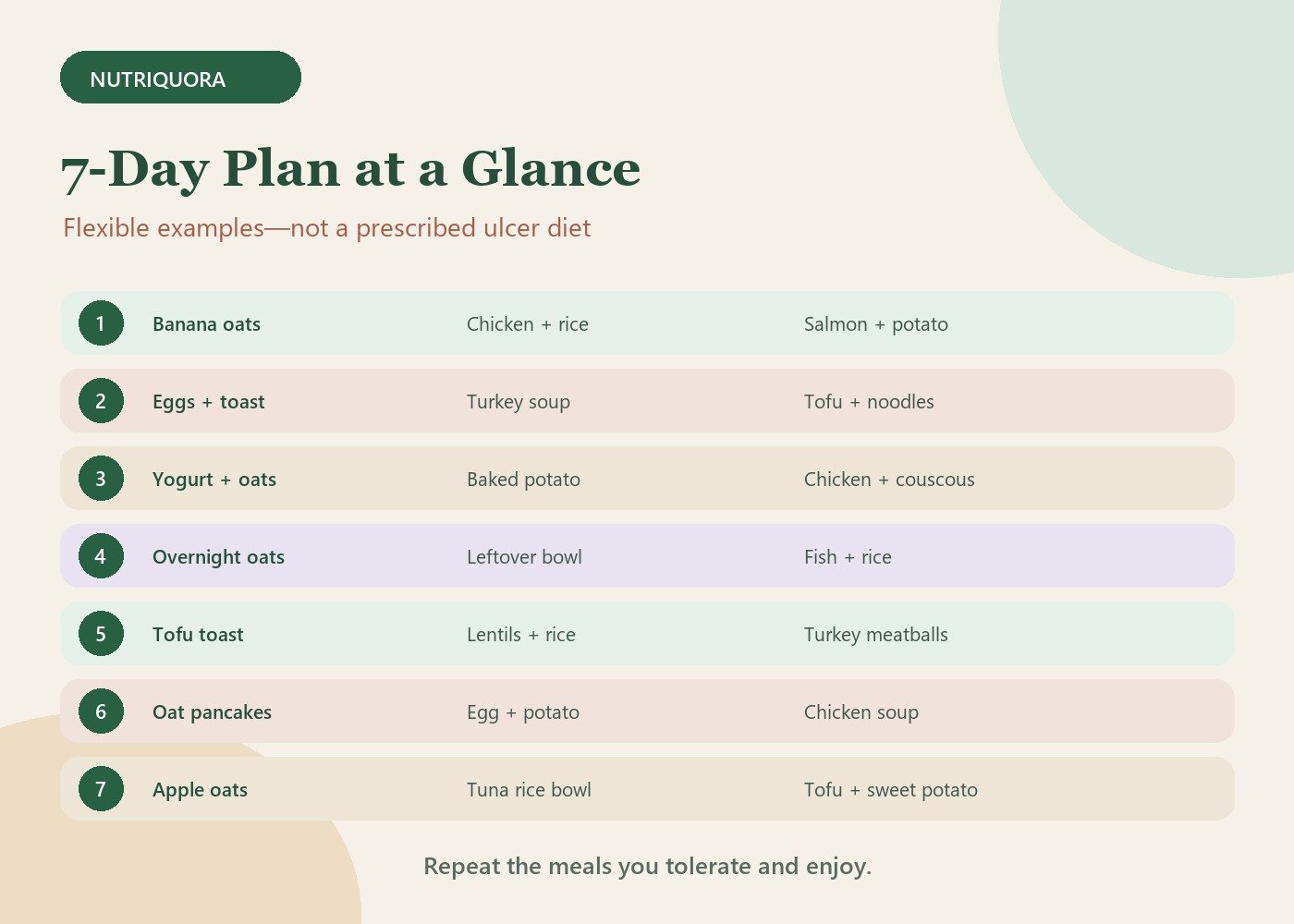
The 7-day meal plan for ulcers below balances convenience with enough flexibility to replace any food that is uncomfortable or unsuitable.
| Day | Breakfast | Lunch | Dinner | Optional snack |
|---|---|---|---|---|
| 1 | Banana oatmeal with milk or fortified soy drink | Chicken, rice and cooked-carrot bowl | Baked salmon, potato and zucchini | Plain yogurt or ripe pear |
| 2 | Soft eggs with toast | Turkey-and-rice soup | Tofu, noodles and cooked spinach | Banana with smooth nut butter |
| 3 | Yogurt-oat bowl with soft fruit | Baked potato with cottage cheese or tofu | Chicken, couscous and green beans | Applesauce and oat crackers |
| 4 | Overnight oats with banana | Leftover chicken couscous bowl | White fish, rice and roasted carrots | Melon or yogurt |
| 5 | Scrambled tofu on toast | Mild lentil-and-rice bowl | Turkey meatballs, pasta and zucchini | Soft pear with ricotta |
| 6 | Oat pancakes with banana | Egg-and-potato bowl | Chicken-and-rice soup | Yogurt or dairy-free alternative |
| 7 | Warm oats with stewed apple | Tuna or chickpea rice bowl | Baked tofu, sweet potato and green beans | Banana-oat smoothie |
The foods in this table are not medically required. They are familiar, adaptable examples chosen to make meal planning simpler.
Day-by-day plan and practical swaps
Day 1: start with familiar foods
- Breakfast: Oats cooked with milk or a fortified soy drink; top with sliced banana.
- Lunch: Rice bowl with shredded chicken and well-cooked carrots.
- Dinner: Baked salmon, mashed potato and cooked zucchini.
- Snack: Plain yogurt or a ripe pear.
Swap: Use tofu instead of chicken or fish. Choose lactose-free yogurt if lactose causes symptoms.
Day 2: prioritize hydration
Day 2 of the 7-day meal plan for ulcers uses soup as an easy way to combine fluid, starch, vegetables and protein.
- Breakfast: Soft scrambled eggs with toast.
- Lunch: Turkey-and-rice soup with carrots.
- Dinner: Tofu with soft noodles and cooked spinach.
- Snack: Banana with a thin layer of smooth peanut or almond butter.
Soup can help with fluid intake, but very salty packaged soup may not suit everyone. Dilute it or prepare a lower-sodium version if advised.
Day 3: test dairy rather than banning it automatically
- Breakfast: Plain yogurt with oats and soft fruit.
- Lunch: Baked potato with cottage cheese and cooked spinach.
- Dinner: Chicken, couscous and tender green beans.
- Snack: Applesauce with plain oat crackers.
Dairy does not treat an ulcer. If it worsens bloating, diarrhea or discomfort, try a lactose-free or fortified dairy-free alternative.
Day 4: use planned leftovers
Planned leftovers keep the 7-day meal plan for ulcers practical without requiring a fresh recipe at every meal.
- Breakfast: Overnight oats with banana.
- Lunch: Leftover chicken-and-couscous bowl.
- Dinner: Baked white fish with rice and roasted carrots.
- Snack: Melon or plain yogurt.
Cool leftovers promptly, refrigerate them and reheat them thoroughly. Discard food that has been left out too long or appears spoiled.
Day 5: introduce legumes carefully
- Breakfast: Scrambled tofu on toast.
- Lunch: Mild lentils with rice and cooked carrots.
- Dinner: Turkey meatballs with pasta and zucchini.
- Snack: Soft pear with ricotta or a dairy-free alternative.
If lentils increase gas or discomfort, start with a smaller portion or replace them with chicken, fish, eggs or tofu.
Day 6: repeat what worked
- Breakfast: Oat pancakes topped with banana.
- Lunch: Egg-and-potato bowl with cooked spinach.
- Dinner: Chicken-and-rice soup.
- Snack: Yogurt or a fortified dairy-free option.
Your own notes are more useful than a universal “ulcer foods” list. Repeat foods that were comfortable and nutritious.
Day 7: build a reusable routine
- Breakfast: Warm oats with stewed apple.
- Lunch: Tuna-and-rice bowl or a mashed-chickpea version.
- Dinner: Baked tofu, sweet potato and tender green beans.
- Snack: Banana-oat smoothie.
At the end of this 7-day meal plan for ulcers, identify two breakfasts, two lunches and two dinners you can rotate while treatment continues.
Five simple preparations
These preparations support the 7-day meal plan for ulcers but can also be mixed into your usual routine.
1. Creamy banana oatmeal
Cook rolled oats in milk, a fortified soy drink or water until soft. Stir in mashed banana. Add cinnamon only if you tolerate it.
2. Chicken, rice and carrot bowl
Combine cooked rice, shredded chicken and soft cooked carrots. Add a little olive oil or broth for moisture. Season mildly to taste.
3. Turkey-and-rice soup
Simmer cooked turkey, rice, carrots and a low-sodium broth until the vegetables are tender. Freeze extra portions for another day.
4. Mild lentil-and-rice bowl
Combine well-cooked lentils with rice and cooked carrots. Start with a small lentil portion if legumes commonly cause gas.
5. Banana-oat smoothie
Blend banana, oats and milk or a fortified alternative. A smoothie can be convenient when appetite is low, but it is not an ulcer treatment.
Do you need to avoid spicy, acidic or fatty foods?
The 7-day meal plan for ulcers starts with milder examples, but it does not claim that every reader must permanently avoid the same foods.
NIDDK does not recommend a universal special diet or a standard list of foods and drinks to avoid for ulcer prevention or treatment.[1] However, a food can still aggravate a person’s symptoms.
Use a short symptom log instead of permanent broad restrictions:
| If this bothers you | Try this swap |
|---|---|
| Coffee or energy drinks | Decaffeinated tea, warm milk alternative or water |
| Citrus or tomato | Melon, banana, pear or non-tomato sauce |
| Very spicy meals | Mild herbs and less chilli |
| Fried or high-fat meals | Baked, grilled or steamed versions |
| Large meals | Smaller meals with a later snack |
| Alcohol | A non-alcoholic drink; ask your clinician about alcohol during treatment |
A symptom trigger is not necessarily the cause of the ulcer. Removing a trigger may improve comfort without treating the underlying problem.
Claims this guide does not make
“Vitamin A shrinks ulcers”
This 7-day meal plan for ulcers does not recommend high-dose vitamin A or claim that vitamin A shrinks an ulcer. High-dose supplements can be harmful, and treatment should target the ulcer’s cause.
“Fiber prevents ulcers”
Fiber-rich foods can be part of a balanced diet, but NIDDK does not state that a high-fiber diet prevents peptic ulcers.[1] Adjust fiber texture and amount according to tolerance and professional advice.
“Sugar slows ulcer healing”
A generally balanced eating pattern is sensible, but this guide does not claim that a specific amount of sugar determines ulcer healing. If you have diabetes or another condition affecting diet, follow individualized advice.
“Probiotics heal stomach ulcers”
Probiotic foods do not replace H. pylori testing or antibiotic treatment. Evidence about probiotic products varies by strain and treatment context. Ask a clinician or pharmacist before using a supplement, especially during antibiotic treatment.
When symptoms need medical care
Peptic ulcers can bleed or perforate. NIDDK advises urgent medical attention for black or tarry stools, blood in vomit or vomit that looks like coffee grounds, sudden severe abdominal pain that does not go away, dizziness or fainting, a rapid pulse or other signs of shock.[2]
Arrange a clinical review if symptoms are new, recurrent or worsening, or if eating has become difficult. Testing for H. pylori may involve breath, stool or blood testing, and some people need endoscopy or other evaluation.[5] Ulcer-like pain can have other causes, so self-diagnosis from symptoms is unreliable.
Frequently asked questions
Can a 7-day meal plan for ulcers heal an ulcer?
No. Food can support comfort and nutrition, but treatment addresses the cause. H. pylori commonly requires antibiotics plus acid-reducing medicine, while an NSAID-related ulcer may require clinician-directed medicine changes.[3]
Is milk good for stomach ulcers?
Milk may feel soothing to some people and uncomfortable to others. It is a food, not a treatment. Use milk or a fortified alternative if it fits your diet and does not worsen symptoms.
Are bananas, oats and yogurt required?
No. They are convenient examples in this 7-day meal plan for ulcers. Replace them with foods that provide similar energy or nutrients and suit your preferences.
Can I drink coffee?
Coffee does not cause every ulcer, but it may worsen symptoms for some people. If you notice a repeatable pattern, reduce the portion, try decaffeinated coffee or pause it while discussing symptoms with a clinician.
Should I take a probiotic with antibiotics?
Do not assume every probiotic product is appropriate. Products contain different strains and doses, and supplement quality varies. Ask the prescriber or pharmacist managing your ulcer treatment.
What if I cannot eat enough?
Contact a clinician or registered dietitian if pain, nausea, vomiting or early fullness is limiting your intake or causing unplanned weight loss. A tailored plan may be safer than adding more restrictions.
The bottom line
A responsible 7-day meal plan for ulcers is a flexible nutrition and symptom-management tool. It should make eating simpler while medical treatment addresses the underlying cause. Keep foods you tolerate, avoid unnecessary restrictions, take prescribed medicine exactly as directed and seek urgent help for bleeding or severe symptoms.
Use the 7-day meal plan for ulcers to reduce day-to-day planning—not to delay diagnosis, treatment or follow-up care.
How this article was created
NutriQuora used research-assisted drafting to rebuild the original article around readers’ practical questions. The final content was edited for clarity and checked against NIDDK, NHS and MedlinePlus guidance.This article has not been medically reviewed.
Sources
[1] NIDDK. Eating, Diet, & Nutrition for Peptic Ulcers.
[2] NIDDK. Symptoms & Causes of Peptic Ulcers.
[3] NIDDK. Treatment for Peptic Ulcers.
[4] NHS. Stomach ulcer.
[5] MedlinePlus. Peptic Ulcer.
One Response