PCOS breakfast advice is often exhausting: cut carbs, count macros, buy special powders, repeat. You can ignore the noise. A satisfying morning meal can be built from familiar foods—without calling any ingredient a hormone cure.
These PCOS breakfast ideas give you exact combinations with protein and fiber-rich plants, plus dairy-free, egg-free and make-ahead swaps. In the next few minutes, you will get a mix-and-match formula and a 15-minute prep plan you can use all week.
Current international guidance for polycystic ovary syndrome (PCOS) says there is no evidence that one specific diet composition is best for every metabolic, hormonal, reproductive or psychological outcome. Instead, it recommends sustainable healthy eating tailored to the individual.[1] The World Health Organization likewise emphasizes healthy eating and physical activity for everyone with PCOS—even when those habits do not lead to weight loss.[2]
Editorial note (updated August 24, 2026): Source-checked by the NutriQuora Editorial Team. This article has not been medically reviewed.
Every option below pairs a protein source with fiber-rich plant foods and, where useful, an unsaturated-fat source. Use the ideas as a flexible framework—not as a treatment for PCOS or a promise to “balance hormones.”
Quick answer: These PCOS breakfast ideas start with a protein food such as eggs, plain Greek yogurt, tofu, beans or cottage cheese. Add a fiber-rich food such as oats, whole-grain bread, berries, vegetables or seeds. Finish with flavor and a satisfying fat such as nuts, seeds, avocado or olive oil.
A simple PCOS breakfast formula
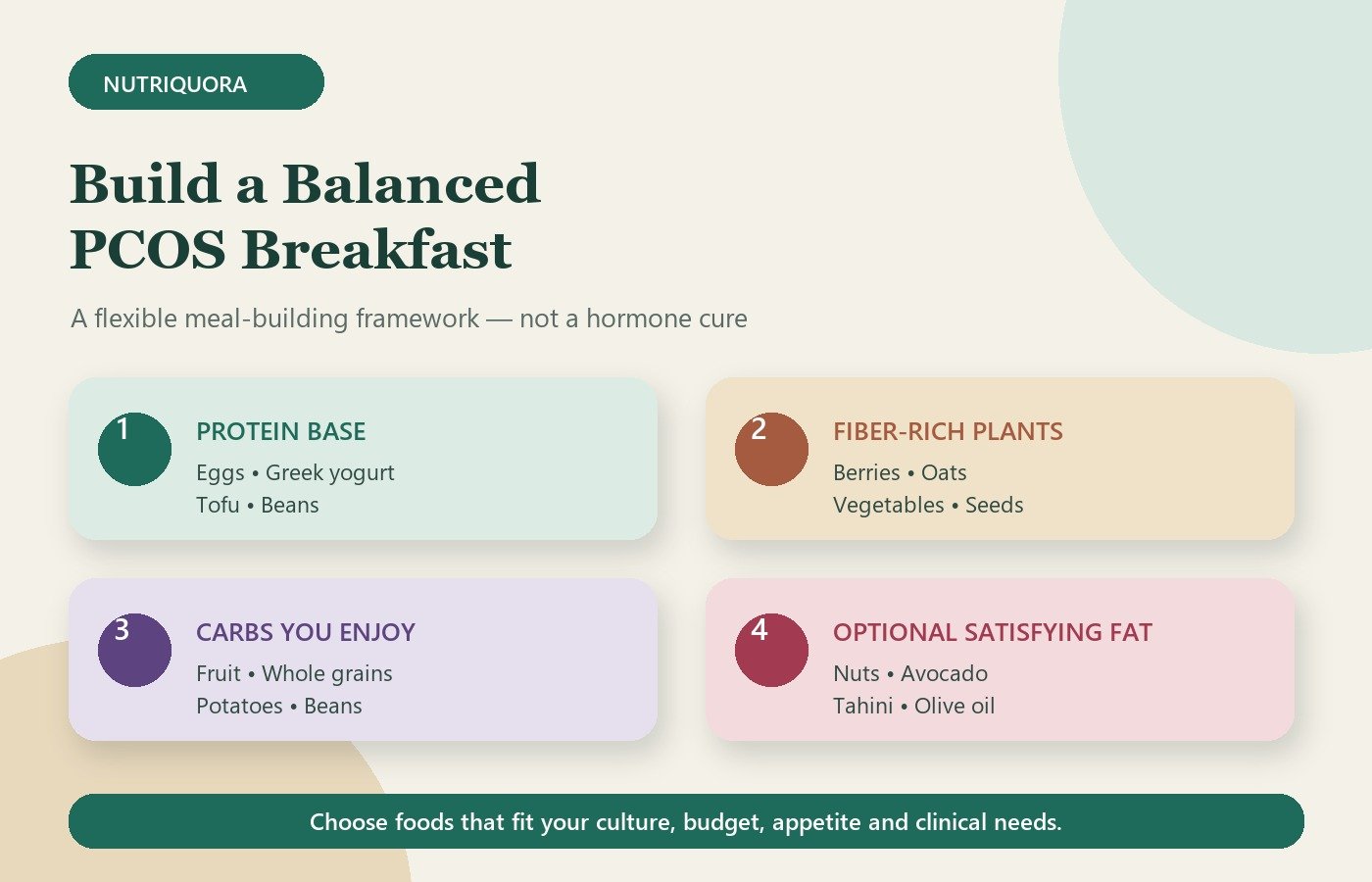
Use this mix-and-match formula to adapt the PCOS breakfast ideas to your own preferences instead of searching for a “perfect” breakfast:
- Choose one protein base: eggs, plain Greek yogurt, cottage cheese, tofu, beans, lentils, unsweetened soy yogurt or another food that fits your needs.
- Add a fiber-rich plant food: berries, apples, pears, leafy greens, tomatoes, peppers, beans, oats or whole-grain bread.
- Include carbohydrates you enjoy: fruit, oats, bread, potatoes and beans can all fit. Pair them with protein and other whole foods rather than treating carbohydrates as forbidden.
- Add optional satisfying fat: chia, ground flaxseed, walnuts, pumpkin seeds, avocado, tahini or olive oil.
- Make it realistic: a two-minute breakfast you eat consistently is more useful than an elaborate plan you abandon after three days.
The 2023 international PCOS guideline specifically favors a flexible, individualized approach and cautions against overly restrictive, nutritionally unbalanced diets.[1]
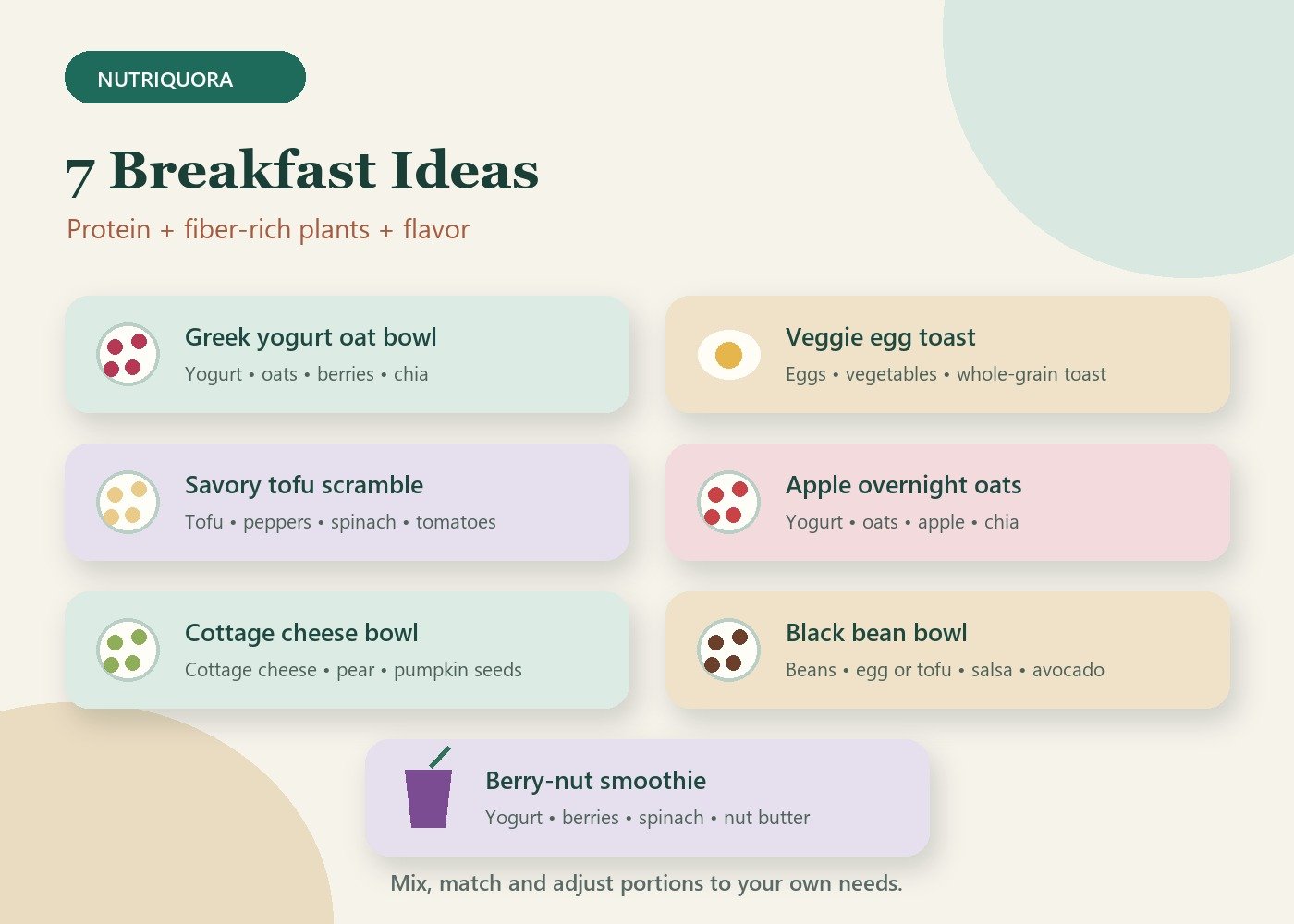
7 balanced PCOS breakfast ideas
The PCOS breakfast ideas below are flexible templates, so swap ingredients to suit your culture, budget, allergies and appetite.
| Breakfast | Main protein | Fiber-rich additions | Time-saving move |
|---|---|---|---|
| Greek yogurt oat bowl | Plain Greek yogurt | Oats, berries, chia | Assemble jars the night before |
| Veggie egg toast | Eggs | Vegetables, whole-grain toast | Use pre-chopped vegetables |
| Savory tofu scramble | Tofu | Peppers, spinach, tomatoes | Cook a double batch |
| Apple-cinnamon overnight oats | Yogurt or soy yogurt | Oats, apple, chia | Prep up to three jars |
| Cottage cheese crunch bowl | Cottage cheese | Pear, berries, seeds | Keep toppings in one container |
| Black bean breakfast bowl | Black beans plus egg or tofu | Beans, salsa, vegetables | Use no-salt-added canned beans |
| Berry-nut smoothie | Yogurt, milk or soy milk | Berries, spinach, chia | Freeze ingredient packs |
1. Greek yogurt oat bowl
Add to a bowl:
- 3/4 cup plain Greek yogurt
- 1/3 cup rolled oats or a small portion of low-sugar muesli
- 1/2 to 1 cup berries
- 1 tablespoon chia seeds or ground flaxseed
- Cinnamon and a small handful of walnuts, if desired
Of the PCOS breakfast ideas here, this is the simplest no-cook option, with creamy, crunchy and naturally sweet elements. Plain yogurt lets you control the sweetness; if it tastes too tart, add fruit or a small drizzle of honey rather than forcing yourself to eat a breakfast you dislike.
Dairy-free option: Choose an unsweetened soy yogurt with a meaningful amount of protein on the nutrition label. Protein content varies widely among plant-based yogurts.
2. Veggie egg toast
Try:
- 2 eggs, scrambled or boiled
- 1 slice whole-grain toast
- A generous handful of spinach, mushrooms, peppers or tomatoes
- 1/4 avocado or a drizzle of olive oil, optional
Sauté the vegetables first, then add the eggs. If mornings are rushed, boil several eggs in advance and serve them with toast, cherry tomatoes and fruit.
Egg-free option: Replace the eggs with a tofu scramble or mashed white beans seasoned with lemon, pepper and herbs.
3. Savory tofu scramble
Cook together:
- 4 to 5 ounces firm tofu, crumbled
- 1 cup mixed vegetables
- Turmeric, black pepper, garlic and smoked paprika
- 1 teaspoon olive oil
- Whole-grain toast or a small cooked potato on the side
Pressing tofu is optional for a breakfast scramble. Cook it until the vegetables are tender and excess moisture has evaporated. Finish with salsa, herbs or a spoonful of tahini.
This is one of the PCOS breakfast ideas that works well for batch cooking: refrigerate a second portion promptly and reheat it the next morning.
4. Apple-cinnamon overnight oats
Combine in a jar:
- 1/2 cup rolled oats
- 1/2 cup plain Greek yogurt or unsweetened soy yogurt
- 1/2 cup milk or unsweetened soy milk
- 1/2 chopped apple
- 1 tablespoon chia seeds
- Cinnamon and vanilla
Stir, cover and refrigerate overnight. Add a little more liquid in the morning if you prefer a softer texture.
Oats do not need to be removed simply because you have PCOS. The international guideline does not identify one macronutrient split or one named diet as superior for everyone.[1] Portion size and the rest of the meal can be adjusted to your appetite, glucose-management plan and clinician’s advice.
5. Cottage cheese crunch bowl
Layer:
- 3/4 cup cottage cheese
- 1 small pear or apple, chopped
- 1 tablespoon pumpkin seeds
- Cinnamon
- Optional berries or a spoonful of oats
For a savory version, replace the fruit and cinnamon with cucumber, tomato, black pepper, herbs and whole-grain crackers.
Lower-sodium option: Compare labels, since sodium can vary between cottage-cheese products.
6. Black bean breakfast bowl
Build a bowl with:
- 1/2 cup rinsed black beans
- 1 egg or 3 to 4 ounces tofu
- Tomato salsa
- Sautéed peppers or spinach
- Avocado, cilantro and lime
- Optional small corn tortilla or leftover roasted potato
Beans contribute both plant protein and fiber, making them a useful budget-friendly breakfast ingredient. Rinsing canned beans improves their flavor and removes some of the canning liquid. Choose a salsa heat level that works for your digestion.
7. Berry-nut smoothie that is actually a meal
Blend:
- 3/4 cup plain Greek yogurt, or unsweetened soy yogurt plus soy milk
- 1 cup frozen berries
- A handful of spinach
- 1 tablespoon chia seeds or ground flaxseed
- 1 tablespoon peanut or almond butter
- Milk or unsweetened soy milk to reach your preferred texture
Among these PCOS breakfast ideas, the smoothie is especially portable. A fruit-only smoothie may not feel like a complete breakfast, so start with a protein base and add seeds or nut butter to make this version more substantial. Drink it slowly and adjust the portion to your appetite.
Food-safety note: Use pasteurized dairy products and clean produce. If you are pregnant, immunocompromised or following a medically prescribed diet, ask your clinician about any additional food-safety needs.
A 15-minute prep plan for busy mornings
Most PCOS breakfast ideas become easier on busy mornings when you prepare a few building blocks on one evening:
- Make two jars of overnight oats.
- Wash berries and sturdy vegetables; keep them dry and refrigerated.
- Boil eggs or cook a batch of tofu scramble.
- Portion chia seeds, ground flaxseed, nuts or pumpkin seeds.
- Rinse and refrigerate beans in a covered container.
- Freeze smoothie packs containing berries and spinach; add the protein base and liquid only when blending.
Use conservative storage times, refrigerate perishable foods promptly and discard anything with an unusual smell, appearance or texture.
What about insulin resistance and carbohydrates?
Insulin resistance is common in PCOS, but individual needs differ. The PCOS breakfast ideas in this guide pair carbohydrate foods with protein and other whole foods; they do not require avoiding every carbohydrate. The international guideline supports healthy eating patterns that reflect a person’s preferences and goals; it does not endorse one universal PCOS diet.[1]
A registered dietitian or qualified clinician can help personalize meal timing, portions and carbohydrate choices if you have diabetes, prediabetes, a history of disordered eating, significant gastrointestinal symptoms, food allergies or fertility-related nutrition concerns.
Common PCOS breakfast mistakes
Treating one food as a hormone cure
No seed, smoothie, tea or breakfast can cure PCOS. Be skeptical of nutrition claims that a single ingredient will “reset” hormones, melt abdominal fat or replace medical care.
Cutting out entire food groups without a medical reason
Unnecessary restriction can make eating less varied, less enjoyable and harder to sustain. The PCOS guideline advises avoiding unduly restrictive and nutritionally unbalanced diets.[1]
Copying someone else’s “perfect” macros
A breakfast that suits an athlete, a person taking glucose-lowering medication or someone with a food allergy may not suit you. Personal context matters.
Skipping breakfast because the internet says you must eat—or must fast
Some people enjoy breakfast; others are not hungry early. PCOS guidance emphasizes individualized, sustainable habits rather than a universal meal schedule.[1] If medication instructions require food, follow the directions from your prescriber or pharmacist.
Frequently asked questions
Which PCOS breakfast ideas are best?
There is no single best breakfast for everyone with PCOS. A practical starting point is a meal with a protein source, fiber-rich plant foods and carbohydrates in a portion that suits your needs. Choose a pattern you can enjoy and repeat.
Can PCOS breakfast ideas include eggs?
Eggs can be one protein option in a varied diet. Pair them with vegetables, fruit, beans or whole-grain toast rather than relying on eggs alone. People with individual medical or dietary restrictions should follow personalized advice.
Can PCOS breakfast ideas include oats?
Oats can fit a PCOS-friendly eating pattern. Current guidance does not support one diet composition as superior for every person with PCOS.[1] Pair oats with a protein food such as plain Greek yogurt or unsweetened soy yogurt and add fruit, nuts or seeds.
Can PCOS breakfast ideas include smoothies?
It can be. Include a protein base and whole-food additions instead of blending only juice and fruit. A smoothie should also be large enough to match your appetite but not treated as medicine.
Do PCOS breakfast ideas matter without weight loss?
No. WHO states that healthy eating and physical activity are important for women with PCOS even when they do not lead to weight loss.[2] Health goals can include energy, nourishment, strength, sleep, metabolic health and quality of life.
The bottom line
The best PCOS breakfast ideas are flexible, balanced and realistic. Build each meal around a protein food, add fiber-rich plants, include carbohydrates you enjoy and adjust it to your appetite and clinical needs. There is no requirement to buy specialty “hormone-balancing” products or follow an extreme diet.
This information is educational and is not a diagnosis or individualized medical advice. Health conditions such as PCOS can affect metabolic, reproductive and psychological health. Seek care from a qualified healthcare professional for diagnosis, treatment and personalized nutrition support.
How this article was created
NutriQuora used research-assisted drafting to organize the breakfast framework and practical examples. The final text was edited for clarity and checked against the linked international PCOS guideline and WHO fact sheet. No recipe was represented as clinically proven, and this article has not been medically reviewed.
Sources
[2] World Health Organization. Polycystic ovary syndrome.