
A sore stomach can make every meal feel like a test. One list says to ban tomatoes. Another bans dairy. A third tells you to live on plain toast.
You do not need one giant list of fear foods.
A bland diet can be a short-term way to choose soft, mild foods when eating feels hard. It cannot heal an ulcer or remove its cause. This guide gives you 25 food ideas, easy swaps, a simple plate plan, and signs that need medical care.
Quick answer: A bland diet uses soft, mild food. Common choices include oats, rice, eggs, chicken, fish, yogurt, bananas, potatoes, and soup. Pick food that feels good to eat. Food may help comfort, but it does not cure an ulcer.
Editorial note: NutriQuora checked this guide against U.S. and NHS health sources. It has not been checked by a doctor. It is not a diagnosis or a care plan. Read our editorial standards.
Table of contents
- What is a bland diet?
- What food can and cannot do
- 25 bland food ideas
- Build a simple meal
- Easy food swaps
- Foods to test rather than fear
- Medical treatment still matters
- When to get medical help
- Frequently asked questions
What is a bland diet?
A bland diet uses food with a mild taste and soft feel. MedlinePlus says it is soft, not spicy, and low in fiber.[4]
This style of eating may feel easier during a short spell of nausea, pain, or poor appetite. It is not the only safe way to eat with an ulcer.
NIDDK says no special diet has been shown to cause, stop, or treat ulcers.[1] You do not need to ban every spicy, sour, or high-fiber food for life.
Think of a bland diet as a comfort tool. Use it for a short time if it helps you eat. Add more food back when you feel ready. Ask your care team when you need help.
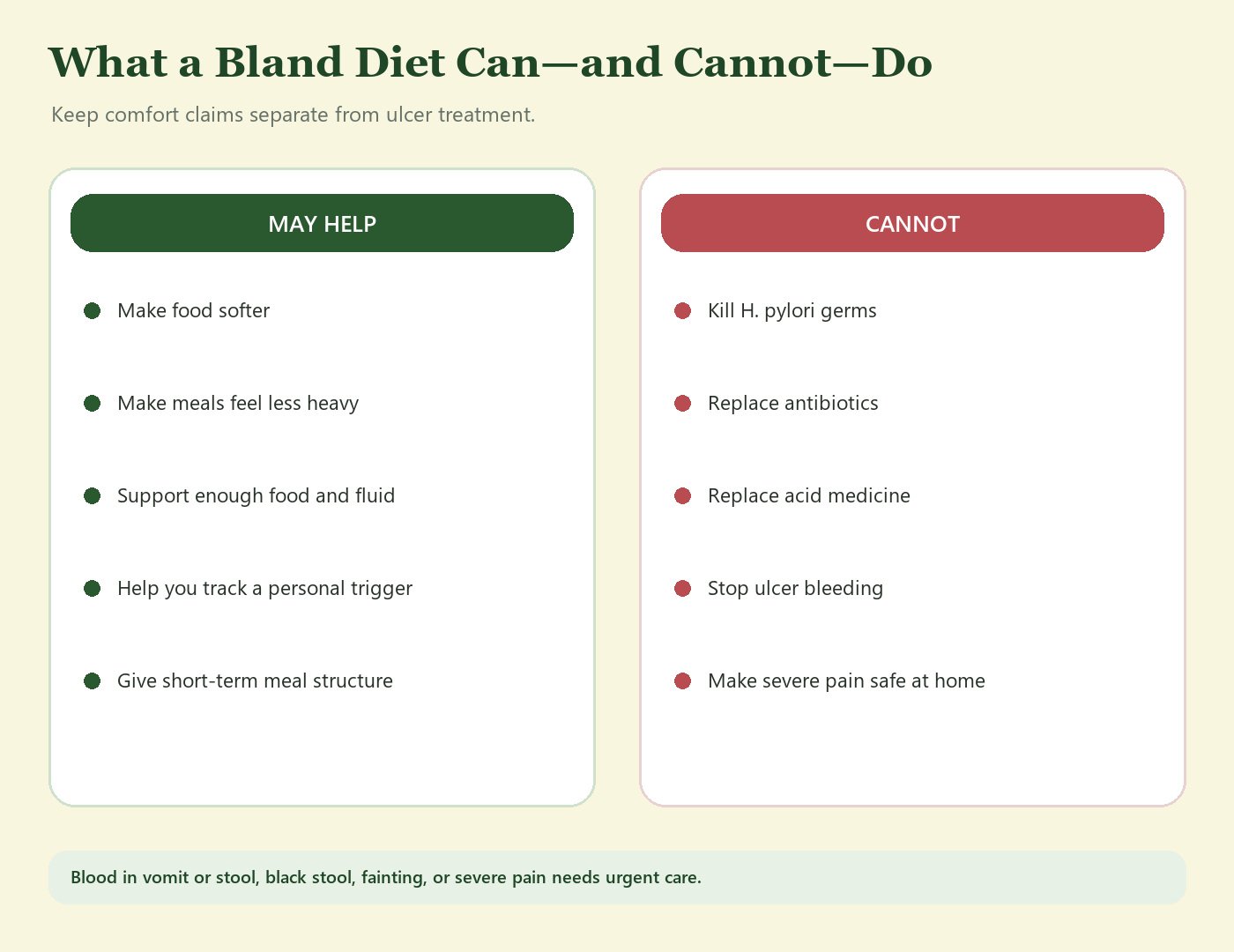
What food can—and cannot—do for an ulcer
Food may help you
- Eat when your appetite is low
- Choose softer textures
- Avoid a personal trigger
- Get protein, carbohydrate, fat, and fluid
- Plan small meals that feel less heavy
MedlinePlus suggests small, more frequent meals as one bland-diet option.[4]
Food cannot
- Kill Helicobacter pylori (H. pylori)
- Replace prescribed antibiotics
- Replace acid-suppressing medicine
- Repair a bleeding ulcer at home
- Make it safe to keep taking an ulcer-causing medicine without medical advice
Doctors treat the cause so the ulcer can heal and is less likely to come back.[2]
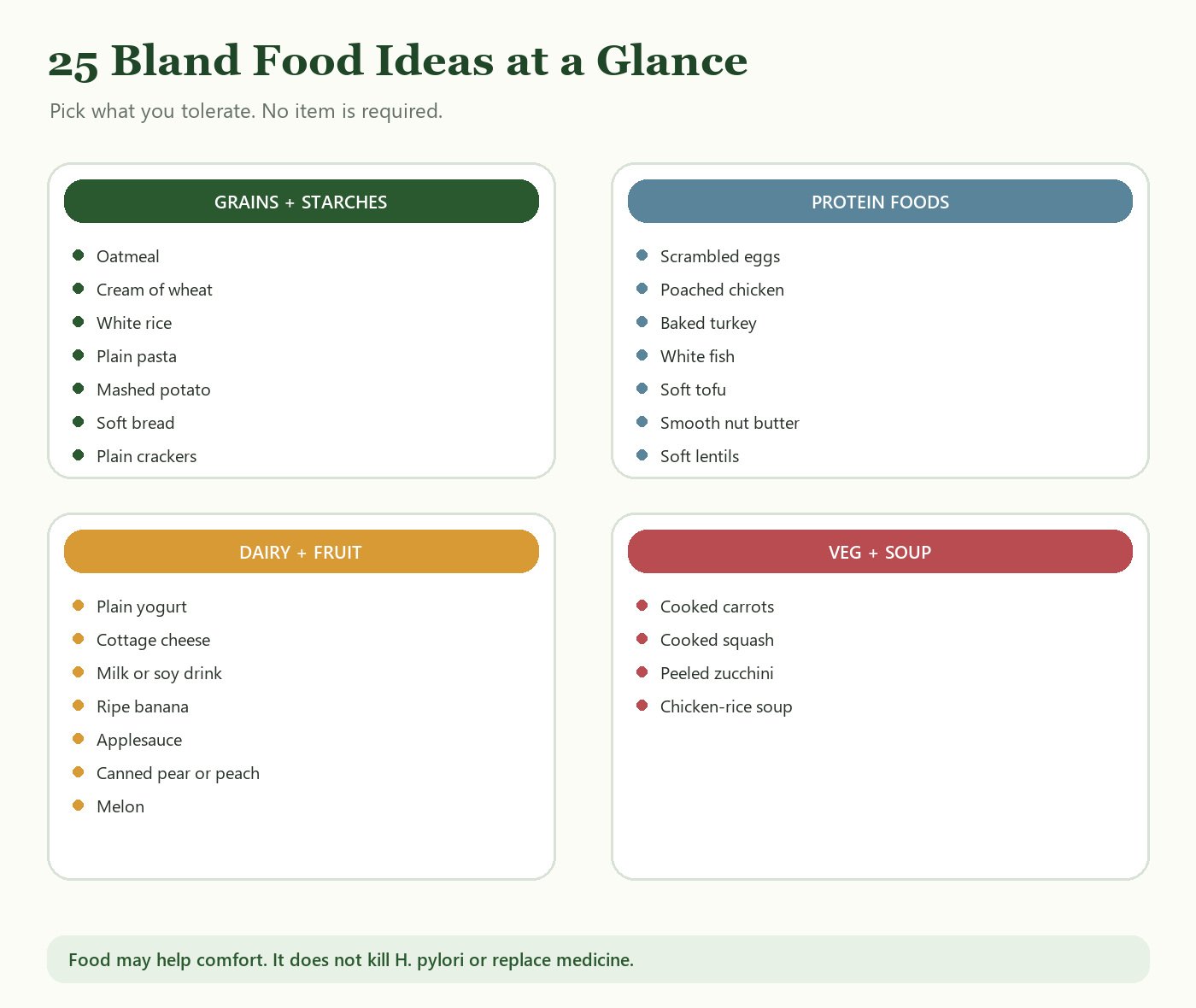
Bland diet food list: 25 gentle ideas
No food is required. Start with foods you know you tolerate. Try one change at a time.
Mild grains and starches
1. Plain oatmeal
Cook oats until very soft. Use water or milk that you tolerate.
Choose plain oats at first. Large amounts of nuts, seeds, or dried fruit can feel rough when your stomach is upset.
2. Cream of wheat
Cook it until smooth. Add a little milk or mashed banana for flavor.
This is lower in fiber than many whole-grain cereals, so it may fit a short bland diet.
3. White rice
White rice is soft and mild. Pair it with chicken, fish, egg, or tofu.
Brown rice has more fiber. You can bring it back later if it feels comfortable.
4. Plain pasta
Choose soft pasta with a small amount of olive oil or a mild sauce.
A rich cream sauce may feel heavy for some people. Tomato sauce is not banned, but its acid may bother a person who already knows it is a trigger.
5. Mashed potatoes
Peel and boil the potatoes. Mash them with a little milk, broth, or olive oil.
Go easy on heavy cream, hot pepper, and large amounts of butter if rich food worsens symptoms.
6. Soft bread or toast
Try plain white or sourdough bread if it feels easy to chew.
Very dry toast can feel rough. Add egg, yogurt, or a thin layer of smooth nut butter if tolerated.
7. Plain crackers
Crackers can be useful when your appetite is low.
Pair them with protein instead of making crackers the whole meal.
Simple protein foods
8. Scrambled eggs
Cook eggs until set but still soft. Skip hot sauce at first if it causes pain.
Eggs give protein in a small portion.
9. Poached chicken
Cook skinless chicken in water or low-sodium broth. Shred it so it is easy to chew.
Use it in rice bowls, soup, or soft sandwiches.
10. Baked turkey
Choose a plain turkey breast or ground turkey patty.
Avoid very spicy seasoning while you are testing tolerance.
11. White fish
Bake cod, tilapia, haddock, or another mild fish until it flakes easily.
Frying adds a lot of fat and may feel heavy.
12. Soft tofu
Warm plain tofu in broth or add it to soft rice.
Tofu is a useful plant protein when meat feels unappealing.
13. Smooth peanut or seed butter
Use a thin layer rather than a large spoonful.
Nut and seed butters contain fat. Keep the portion small if high-fat food is a personal trigger. Avoid them with an allergy.
14. Lentils cooked very soft
Lentils are not part of every classic bland diet because they contain fiber.
If you already tolerate them, start with a small, very soft portion. If they cause gas or pain, pause and try them later.
Dairy and gentle alternatives
15. Plain yogurt
Choose plain yogurt with live cultures if you enjoy it. Low-fat yogurt may feel lighter than a rich dessert yogurt.
Yogurt is optional. Skip it if dairy causes symptoms or you have an allergy.
16. Cottage cheese
Use a small bowl of low-fat cottage cheese with soft fruit.
The texture may not suit everyone. Smooth it in a blender if needed.
17. Milk or a fortified alternative
Milk does not heal an ulcer. It can still be part of a meal if you tolerate it.
Choose lactose-free milk or a fortified soy drink if regular milk causes gas or diarrhea.
Soft fruit ideas
18. Ripe banana
Eat it plain, mash it into oatmeal, or blend it with yogurt.
Bananas are not required, but their soft texture can be useful.
19. Unsweetened applesauce
Applesauce is softer than a raw apple with skin.
Choose an unsweetened version when possible.
20. Canned pears or peaches
Pick fruit packed in water or juice. Drain it before eating.
The fruit should be soft enough to cut with a spoon.
21. Melon
Try ripe cantaloupe or honeydew in a small portion.
Chew well. Stop if any fruit worsens pain.
Cooked vegetables and soups
22. Cooked carrots
Steam or boil carrots until soft.
Mash them if chewing feels tiring.
23. Cooked squash
Butternut squash, pumpkin, or yellow squash can be baked or simmered until tender.
Keep seasoning mild during a symptom flare.
24. Peeled zucchini
Peel and cook zucchini until soft. Add it to rice, pasta, or soup.
Raw vegetables may feel harder to digest during a short bland-diet phase.[4]
25. Broth-based chicken and rice soup
Use soft rice, shredded chicken, carrots, and mild broth.
Soup adds food and fluid in one bowl. Let it cool enough to eat comfortably.
How to build a simple bland-diet meal
Use this four-part pattern:
- Choose one starch: rice, oats, pasta, potato, or soft bread.
- Add one protein: egg, chicken, turkey, fish, tofu, yogurt, or cottage cheese.
- Add one soft plant food: banana, applesauce, cooked carrots, squash, or peeled zucchini.
- Add a drink: water, milk you tolerate, or weak non-caffeinated tea.
You do not need all four parts at every snack. Use the pattern to stop a bland diet from becoming only toast and crackers.
U.S. food guidance asks people to eat many kinds of whole food.[6] This includes protein foods, dairy, fruit, vegetables, fats, and grains. A short bland phase should still include enough food.
Three quick meal examples
- Oatmeal, banana, and plain yogurt
- Rice, shredded chicken, and cooked carrots
- Mashed potato, baked fish, and soft squash
For a day-by-day schedule, use NutriQuora’s existing 7-day meal plan for ulcers. This new guide is a food list, not a duplicate meal plan.
Easy swaps for common trouble spots
| If this feels hard to eat | Try this softer or milder option |
|---|---|
| Raw apple | Applesauce or canned pear |
| Raw salad | Cooked carrots, squash, or zucchini |
| Fried chicken | Poached or baked chicken |
| Brown rice | White rice for a short time |
| Chili or hot curry | Mild chicken-and-rice soup |
| Rich cream sauce | Broth, yogurt sauce, or a little olive oil |
| Crunchy nuts | Thin smooth nut butter, if tolerated |
| Large steak | Fish, tofu, egg, or shredded chicken |
| Strong coffee | Water or a weak non-caffeinated drink |
| Large meal | A smaller meal plus a planned snack |
These swaps are about comfort, not ulcer healing.
Foods to test rather than fear
NIDDK does not recommend one universal list of foods to avoid for ulcer treatment.[1]
Some people notice pain after coffee, alcohol, fried foods, hot pepper, chocolate, citrus, or tomato. Others do not.
Use a simple food note:
- What did you eat?
- How much?
- What time?
- What symptoms followed?
- Did the same thing happen again?
One bad day does not prove that one food caused the pain. Test one food at a time. Ask a dietitian or clinician for help if your diet gets very small.
Do not stay low in fiber forever without a reason
A classic bland diet may be low in fiber.[4] That can be useful for a short period for some people, but it is not a balanced long-term goal for everyone.
Add tolerated fruit, vegetables, whole grains, and legumes back step by step when you are ready.
Medical treatment still matters
Peptic ulcers often have a cause that food cannot remove.
NIDDK names H. pylori germs as one common cause.[3] Some pain drugs are another common cause. These include aspirin, ibuprofen, and naproxen.[3]
Doctors often treat H. pylori with more than one antibiotic plus an acid-reducing medicine.[2]
Do not stop a prescribed medicine on your own. If a doctor thinks an NSAID is part of the problem, the doctor may change the medicine or its use.[2]
Finish antibiotics exactly as prescribed. Food choices cannot replace them.
When ulcer symptoms need medical help
Get urgent medical help if:
- You vomit red blood
- Your vomit looks like coffee grounds
- Your stool is black, sticky, or bloody
- You have sudden or severe stomach pain
- You feel faint or very dizzy
- Your pulse becomes fast
- Your belly is very painful to touch
NIDDK and NHS list these as warning signs of bleeding or another serious problem.[3][5]
Make a medical visit if pain keeps coming back. Call if you lose your wish to eat, lose weight, keep vomiting, or cannot eat enough.
A bland diet should never delay care for bleeding, severe pain, or trouble keeping food down.
Frequently asked questions
Can a bland diet heal a stomach ulcer?
No. NIDDK says a special diet is not proven to treat an ulcer.[1] Treatment must address the cause.
Is a bland diet the same as a soft food diet?
Not always. A soft food diet focuses on texture and chewing. A bland diet also limits strong spices and may lower fiber for a short time.
Is milk good for ulcers?
Milk does not heal an ulcer. You may include it if you tolerate it. Try lactose-free milk if regular milk causes symptoms. A fortified soy drink is another choice.
Can I eat spicy food with an ulcer?
Spicy food does not cause every ulcer. It may make symptoms worse for some people. Test your own tolerance rather than assuming a lifetime ban.[1]
Can I drink coffee?
Coffee and caffeine may bother some people. If pain follows coffee more than once, reduce it or pause it and discuss symptoms with your clinician.
Are raw vegetables bad for ulcers?
Not for everyone. A short bland diet often uses cooked vegetables because they are softer.[4] Raw vegetables can be added back when tolerated.
Should I avoid all acidic foods?
No acid-free diet is proven to heal ulcers.[1] Pause a food if it makes symptoms worse more than once. A clinician may also give you a clear reason to avoid it.
What if I cannot eat enough?
Tell a clinician if pain, nausea, or vomiting keeps you from eating. A dietitian can help you find higher-energy foods and drinks that fit your needs.
Can I take ibuprofen for ulcer pain?
Do not self-treat ulcer pain with ibuprofen or another NSAID. NSAIDs are a common ulcer cause.[3] Ask a clinician what pain medicine is appropriate for you.
How long should I follow a bland diet?
There is no universal number of days. Use it as a short comfort tool, then add foods back as tolerated. Ask for medical or dietitian guidance if your diet stays very limited.
Bottom line
A bland diet food list should make eating simpler, not scarier.
Choose soft starches, a protein food, and a cooked fruit or vegetable. Eat smaller meals if that feels better. Keep notes on personal triggers.
Most important, use food for comfort while medical treatment addresses the ulcer’s cause.
2 Responses