Fatty liver disease affects millions of people worldwide, and in most cases, it develops silently for years before anyone notices something is wrong. Understanding the symptoms of fatty liver — from the earliest, easy-to-miss signs to the warning signals of advanced disease — can help you catch the condition early, when it’s most treatable.
What Are the Symptoms of Fatty Liver?
Fatty liver disease occurs when excess fat builds up in liver cells, interfering with the organ’s ability to filter toxins, process nutrients, and regulate metabolism. The tricky part is that the symptoms of fatty liver are often vague, mild, or completely absent in the early stages. This is why fatty liver is sometimes called a “silent” disease — many people only discover it during a routine blood test or an ultrasound done for an unrelated reason.
Still, the body often does send subtle signals. Learning to recognize them can make the difference between catching the disease early and letting it progress unnoticed.
Early Symptoms of Fatty Liver
Fatigue and Low Energy
One of the most commonly reported early symptoms of fatty liver is persistent tiredness that doesn’t improve with rest. This happens because a stressed, fat-laden liver struggles to process nutrients efficiently and regulate blood sugar, which can leave you feeling drained even after a full night’s sleep. Because fatigue is such a general symptom, it’s frequently dismissed or blamed on stress, poor sleep, or a busy lifestyle — which is exactly why it’s often overlooked as an early warning sign of liver trouble.
Pain or Discomfort in the Upper Right Abdomen
As fat accumulates, the liver can become mildly enlarged (a condition called hepatomegaly), stretching the tissue surrounding it. This can cause a dull ache, heaviness, or tenderness in the upper right side of the abdomen, just below the ribs. Some people describe it as a feeling of fullness or pressure rather than sharp pain. This discomfort is often intermittent, which can make it easy to ignore or mistake for indigestion.
Bloating, Nausea and Digestive Changes
Because the liver plays a central role in digestion and metabolism, early liver dysfunction can show up as gastrointestinal complaints. Bloating, mild nausea, a reduced appetite, or general digestive discomfort after eating (especially fatty or heavy meals) are among the subtler symptoms of fatty liver. These symptoms overlap with so many other common conditions that they’re rarely linked to the liver right away.
Unexplained Weight Changes
Unintentional weight gain — particularly around the abdomen — is closely associated with fatty liver, since the condition is strongly linked to insulin resistance and metabolic syndrome. Less commonly, unexplained weight loss can occur as the disease progresses and the liver’s ability to regulate metabolism deteriorates. Either pattern, especially without a clear lifestyle cause, is worth discussing with a doctor.
Other Possible Symptoms of Fatty Liver
Beyond the most common early signs, some people notice:
- Mild, general weakness
- Difficulty concentrating or “brain fog”
- Slight, intermittent right-sided abdominal tenderness that comes and goes
- A general sense of feeling “unwell” without a clear cause
None of these symptoms are exclusive to fatty liver, which is part of why the condition is so frequently missed in its early stages.
Why Fatty Liver Often Has No Symptoms
The liver is a remarkably resilient organ with significant reserve capacity — it can continue functioning relatively normally even when a considerable portion of its tissue is affected by fat buildup. This is the main reason simple fatty liver (steatosis) often produces no noticeable symptoms at all. The liver simply doesn’t have pain receptors in the way skin or muscle does, so damage can accumulate quietly for years.
This is also why fatty liver is frequently diagnosed incidentally — during a routine physical, an abdominal ultrasound for another issue, or blood work that shows mildly elevated liver enzymes. Regular checkups and liver function tests are especially important for people with risk factors like obesity, type 2 diabetes, high cholesterol, or heavy alcohol use, since symptoms alone cannot be relied upon for early detection.
What Do Advanced Fatty Liver Symptoms Look Like?
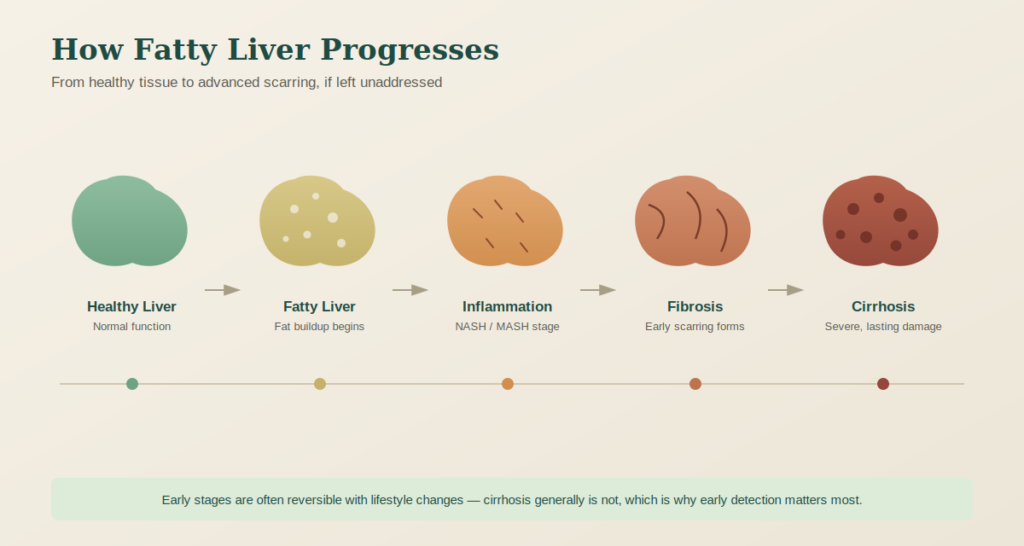
When fatty liver progresses beyond simple fat accumulation into inflammation, scarring, and eventually cirrhosis, the symptoms of fatty liver become more noticeable and specific.
Signs of Liver Inflammation
When fat buildup triggers inflammation — a stage known as non-alcoholic steatohepatitis (NASH) or metabolic-associated steatohepatitis (MASH) — symptoms tend to intensify. These can include:
- More persistent and pronounced fatigue
- Increased or constant pain in the upper right abdomen
- Mild fever in some cases
- Noticeably elevated liver enzymes on blood tests
Symptoms of Liver Fibrosis
As inflammation continues, the liver begins forming scar tissue (fibrosis) in an attempt to repair itself. At this stage, people may notice:
- Increasing fatigue and general malaise
- Loss of appetite
- Mild, unexplained weight loss
- Itchy skin, caused by a buildup of bile products in the bloodstream
- Spider-like blood vessels visible on the skin (spider angiomas)
Warning Signs of Cirrhosis
Cirrhosis represents severe, often irreversible scarring that significantly impairs liver function. At this advanced stage, symptoms become much more serious and include:
- Yellowing of the skin and eyes (jaundice)
- Swelling in the legs, ankles, or feet (edema)
- Abdominal swelling from fluid buildup (ascites)
- Easy bruising or bleeding
- Dark urine and pale or clay-colored stools
- Confusion, memory problems, or difficulty concentrating (hepatic encephalopathy)
- Intense itching
- Noticeable, unintentional weight loss and muscle wasting
When Fatty Liver Symptoms Need Urgent Medical Attention
While early fatty liver symptoms are typically manageable and non-urgent, certain signs point to serious complications that require immediate medical care. Seek prompt medical attention if you experience:
- Yellowing of the skin or eyes (jaundice)
- Severe abdominal pain or swelling
- Vomiting blood or passing black, tarry stools
- Sudden confusion, disorientation, or extreme drowsiness
- Significant swelling in the legs or abdomen
- Easy bruising or unusual bleeding
These symptoms can indicate advanced liver damage, cirrhosis, or liver failure, all of which need timely diagnosis and treatment to prevent life-threatening complications.
The Bottom Line
The symptoms of fatty liver range from barely noticeable fatigue and mild digestive discomfort in the early stages to serious, unmistakable signs like jaundice and confusion in advanced disease. Because early fatty liver is often silent, routine screening — especially for people with obesity, diabetes, or metabolic risk factors — remains one of the most effective ways to catch the condition before it progresses. If you notice persistent fatigue, unexplained abdominal discomfort, or any of the more advanced warning signs described above, consult a healthcare provider for proper evaluation and testing.
How Is Fatty Liver Treated?
There’s no single medication that cures fatty liver outright — treatment focuses on addressing the root causes and giving the liver a chance to heal itself. The good news is that fatty liver, especially in its early stages, responds very well to lifestyle changes.
Weight Loss and Healthy Weight Management
Losing even 5-10% of body weight can significantly reduce liver fat, and losing closer to 10% can help reduce inflammation and even reverse early fibrosis in some cases. Gradual, sustainable weight loss — rather than crash dieting — is considered the single most effective treatment for fatty liver disease.
Making Changes to Your Diet
A liver-friendly diet typically emphasizes whole foods, fiber, lean protein, and healthy fats while cutting back on refined carbohydrates, added sugars, and processed foods. Patterns like the Mediterranean diet are frequently recommended because they’re naturally low in the ingredients that drive fat accumulation in the liver.
Regular Exercise
Physical activity helps reduce liver fat even without significant weight loss. A combination of aerobic exercise (like brisk walking, cycling, or swimming) and strength training, done consistently — ideally 150 minutes or more per week — supports better insulin sensitivity and liver health.
Managing Diabetes, Cholesterol and Blood Pressure
Fatty liver is closely tied to metabolic syndrome, so controlling blood sugar, cholesterol, and blood pressure is a core part of treatment. Working with a doctor to keep these numbers in a healthy range reduces the strain on the liver and lowers the risk of disease progression.
Reducing or Avoiding Alcohol
Alcohol is directly toxic to liver cells and accelerates fat buildup and inflammation. For alcohol-related fatty liver, cutting alcohol out entirely is essential. Even with non-alcoholic fatty liver disease, reducing alcohol intake is strongly advised to avoid additional liver stress.
Medications and Treatment for Underlying Conditions
While no drug is universally approved to treat fatty liver itself, doctors may prescribe medications for related conditions — such as diabetes medications, cholesterol-lowering drugs, or newer liver-targeted therapies in specific cases. Treating these underlying conditions often improves liver health as a side benefit.
Can Fatty Liver Be Reversed?
Yes. Simple fatty liver (steatosis), the earliest stage, is generally considered reversible. With consistent weight loss, dietary changes, and exercise, many people see their liver fat levels return to normal.
How Long Does It Take to Improve Fatty Liver?
Improvement timelines vary, but many people notice measurable reductions in liver fat within 3 to 6 months of sustained lifestyle changes. Full normalization of liver enzymes and imaging results can take longer, often 6 months to a year, depending on the starting severity and how consistently changes are maintained.
Can Liver Damage Be Reversed?
Fat buildup and mild inflammation are typically reversible. Fibrosis (early scarring) can sometimes be partially reversed with sustained treatment, but cirrhosis (advanced, permanent scarring) generally cannot be undone. This is why catching and treating fatty liver early makes such a significant difference in long-term outcomes.
What Happens If Fatty Liver Is Left Untreated?
Left unaddressed, fatty liver can progress from simple fat buildup to inflammation (NASH/MASH), then to fibrosis, and eventually to cirrhosis or liver failure. Advanced fatty liver disease also raises the risk of liver cancer and significantly increases the risk of cardiovascular disease, since the two conditions share many of the same underlying metabolic drivers.
What are the first warning signs of fatty liver?
The earliest symptoms of fatty liver are often subtle and easy to overlook — persistent fatigue, mild discomfort in the upper right abdomen, occasional bloating or nausea, and unexplained weight changes. Many people have no symptoms at all in the early stages, which is why routine checkups matter.
Can you have fatty liver with no symptoms?
Yes, this is actually the most common scenario. Simple fatty liver (steatosis) frequently causes no noticeable symptoms and is often discovered incidentally through blood tests or imaging done for other reasons.
Is fatty liver a serious condition?
It depends on the stage. Simple fatty liver is generally manageable and often reversible with lifestyle changes. If left untreated, however, it can progress to inflammation (NASH/MASH), fibrosis, and eventually cirrhosis or liver failure, which are serious and potentially life-threatening.
How do you know if your fatty liver is getting worse?
Worsening fatty liver often brings more pronounced fatigue, ongoing abdominal pain, unexplained weight loss, itchy skin, and in advanced stages, jaundice, swelling, or confusion. Rising liver enzyme levels on blood tests are also a key indicator, even before symptoms become obvious.
Can fatty liver be cured completely?
Early-stage fatty liver can often be fully reversed through weight loss, dietary changes, and exercise. Fibrosis can sometimes be partially reversed, but cirrhosis is generally permanent, which is why early treatment is so important.
What foods should I avoid with fatty liver?
It’s best to limit added sugars, refined carbohydrates, fried and processed foods, excess red meat, and alcohol, all of which contribute to fat buildup and inflammation in the liver.
Does fatty liver cause pain?
It can, though not always. Some people experience a dull ache or pressure in the upper right abdomen as the liver becomes mildly enlarged, while others feel no pain at all, even with significant fat buildup.
How is fatty liver diagnosed?
Fatty liver is typically identified through blood tests (checking liver enzymes), imaging such as ultrasound, CT, or MRI, and in some cases a liver biopsy or specialized elastography scan to assess fat content and scarring.
Important No
This article is for informational purposes only and is not a substitute for professional medical advice, diagnosis, or treatment. Always consult a qualified healthcare provider with questions about your health.